
Knee pain has a way of gradually affecting almost every part of daily life. What begins as a mild ache after a long walk or a slight discomfort while climbing stairs can slowly make simple activities like standing, exercising, driving, or even getting out of bed feel exhausting. For many people, the first thought is that surgery is inevitable. Fortunately, that is far from the truth.
In reality, a large number of knee problems respond well to non-surgical treatments when they are diagnosed early and managed with the right combination of medical care, rehabilitation, healthy lifestyle choices, and supportive therapies. Whether your pain is caused by age-related wear and tear, an old sports injury, inflammation, muscle weakness, or repetitive strain, modern knee pain treatment without surgery focuses on improving the health of the entire joint rather than simply masking the pain.
The key lies in understanding why your knee hurts in the first place. Once the underlying cause is identified, treatment can be tailored to reduce pain, restore movement, strengthen the muscles supporting the joint, and help you return to an active lifestyle without disrupting your routine.
This comprehensive guide explores the most effective non surgical treatment for knee pain, combining evidence-based medical treatments with lifestyle modifications, physiotherapy, nutrition, and complementary approaches that work together to support long-term joint health.
Is Knee Pain Treated Without surgery?
Yes, knee pain can often be treated successfully without surgery. Depending on the cause, non-surgical knee pain treatment may include medications to control pain and inflammation, physiotherapy to improve strength and flexibility, lifestyle modifications, weight management, supportive braces, exercise therapy, nutritional support, regenerative treatments such as PRP, and selected complementary therapies like Ayurveda. Early diagnosis and a personalized treatment plan offer the best chance of reducing pain, improving mobility, and protecting the knee from further damage.
Why Does Knee Pain Happen?
The knee is one of the most hardworking joints in the human body. Every step you take, every staircase you climb, and every time you sit down or stand up, the knee absorbs and distributes a significant amount of your body weight. Because it performs so many demanding tasks throughout the day, even small changes within the joint can eventually lead to persistent pain.
Knee pain rarely develops for a single reason. Instead, it usually results from a combination of factors that place repeated stress on the joint over months or years. Understanding these underlying causes is the first step toward choosing the most effective treatment.
- Natural wear and tear with age gradually affects the smooth cartilage that cushions the bones inside the knee. As this protective layer becomes thinner, movement may become painful and stiffness can develop, particularly after long periods of inactivity or physical exertion.
- Inflammation within the joint is another common reason for discomfort. Whether triggered by arthritis, overuse, or an injury, inflammation causes swelling, tenderness, and reduced mobility, making even routine activities feel uncomfortable.
- Weak muscles around the knee often contribute more to pain than people realize. When the thigh, hip, and core muscles are unable to support the joint effectively, extra pressure is transferred directly to the knee during movement, increasing the risk of pain and instability.
- Previous injuries, even those that seemed minor at the time, can alter the way the knee functions. Ligament sprains, cartilage injuries, or untreated meniscus damage may change joint mechanics, leading to recurring pain years after the initial injury.
- Lifestyle factors such as excess body weight, prolonged sitting, poor posture, unsuitable footwear, or repetitive high-impact activities place continuous stress on the knee joint. Over time, these habits can accelerate joint degeneration and make recovery more difficult.
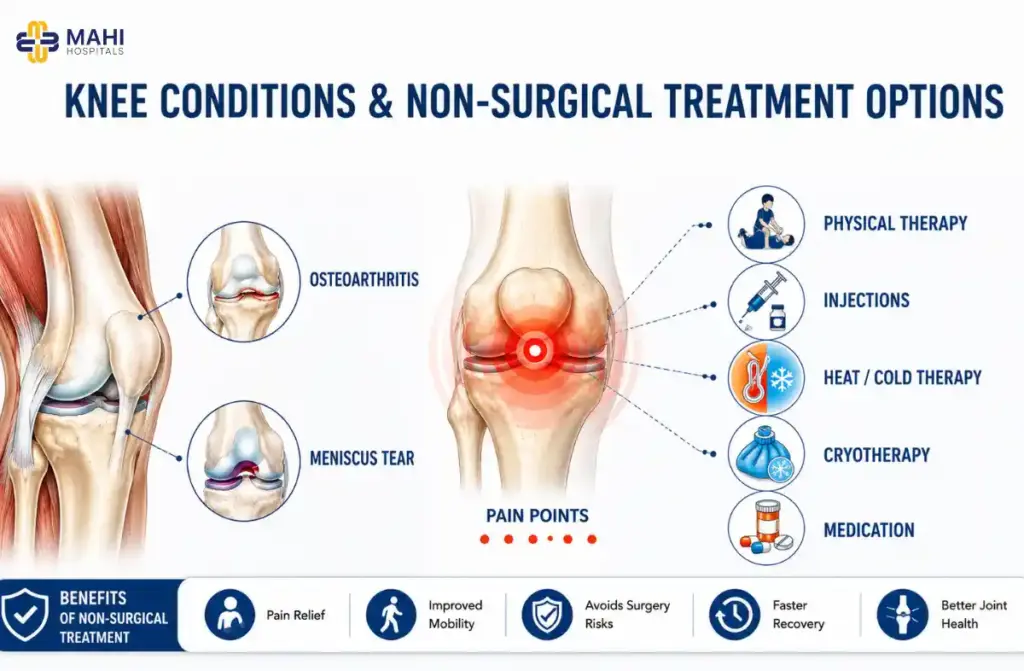
Because every individual’s condition is unique, successful nonsurgical management of knee pain focuses on identifying which of these factors is contributing to the pain instead of treating every patient in the same way. This is exactly why knee pain treatment without surgery works best when it is personalized rather than generic.
Understanding Your Knee Before Choosing a Treatment
- One of the biggest misconceptions about knee pain is that every painful knee has the same underlying problem. In reality, two people experiencing similar symptoms may require completely different treatment approaches.
- For example, pain caused by inflamed tendons responds very differently from pain caused by cartilage wear or muscle weakness. Likewise, stiffness associated with osteoarthritis requires a different rehabilitation strategy than discomfort resulting from poor movement patterns or repetitive strain.
- This is why orthopedic specialists begin with a thorough clinical evaluation before recommending any treatment. They consider your symptoms, daily activities, medical history, physical examination findings, and, when necessary, imaging tests such as X-rays or MRI scans to understand what is actually happening inside the joint.
- Only after identifying the source of the problem can an effective treatment plan be created—one that not only relieves pain but also improves knee function and helps prevent future flare-ups. This careful evaluation is the foundation of any reliable knee pain treatment without surgery plan.
- Expert Insight: Treating knee pain without understanding its cause is similar to repairing a leaking roof without finding where the water is entering. Lasting relief comes from addressing the underlying problem, not simply reducing the symptoms.
Medical Approaches for Knee Pain Treatment Without Surgery
For many people, treatment begins with conservative medical care aimed at reducing pain, controlling inflammation, and creating the right environment for healing. These treatments are often most effective when combined with physiotherapy and healthy lifestyle changes rather than used in isolation.
Instead of providing temporary relief alone, modern non-surgical knee pain treatment focuses on helping patients remain active while their knee gradually regains strength and function.
Pain-Relieving Medications
Pain medications are commonly recommended during the early stages of treatment, particularly when discomfort interferes with walking, sleeping, or performing everyday activities. By reducing pain to a manageable level, these medications make it easier for patients to participate in physiotherapy and continue their normal routine instead of avoiding movement altogether.
While they can significantly improve comfort during flare-ups, they are generally intended for short-term symptom management and should always be taken according to medical advice to minimize potential side effects.
Anti-Inflammatory Medications
When swelling and inflammation are the primary source of discomfort, anti-inflammatory medications may help calm the irritated tissues surrounding the joint. Reducing inflammation often improves range of motion and allows rehabilitation exercises to be performed more comfortably.
Because inflammation may have different underlying causes, these medications should be selected based on an accurate diagnosis rather than self-medication.
Topical Pain Relief
Not every patient requires oral medication. Medicated gels, creams, and patches applied directly over the painful area can provide localized relief for mild to moderate symptoms. They are particularly useful for individuals who may not tolerate certain oral medications or who require additional pain control alongside other treatments.
Although topical treatments are generally convenient and easy to use, they work best as part of a broader treatment plan instead of being relied upon as the only solution.
Supportive Devices
In selected cases, orthopedic specialists may recommend knee braces, compression sleeves, or supportive taping techniques to improve stability and reduce excessive stress on specific parts of the joint. These devices are especially beneficial during physical activity or while recovering from certain injuries.
Rather than replacing muscle strength, supportive devices are designed to complement rehabilitation by allowing patients to move more confidently while their knee gradually becomes stronger.
Pain relief is only the first step toward recovery. While medications and supportive devices can make everyday activities more comfortable, they cannot rebuild the strength or movement your knee has lost over time. Lasting improvement comes from restoring the muscles, flexibility, and stability that allow the joint to function naturally again. This is why orthopedic specialists consider physiotherapy one of the most important parts of non surgical treatment for knee pain—it focuses on correcting the underlying mechanical problems rather than simply controlling the symptoms.
Physiotherapy: The Foundation of Long-Term Recovery
Among all non-surgical treatments available today, physiotherapy remains one of the most effective and scientifically supported approaches for managing knee pain. Instead of simply reducing symptoms for a short period, it addresses the mechanical problems that often cause pain to persist in the first place.
A carefully designed rehabilitation program strengthens the muscles that support the knee, improves flexibility, restores balance, and retrains movement patterns so the joint can function more efficiently. As the surrounding muscles become stronger, they absorb more of the stress that would otherwise be placed directly on the knee, helping to reduce pain during everyday activities.
Recovery through physiotherapy is rarely about performing a few exercises at home. It is a structured process that evolves as the knee improves, ensuring that each stage of rehabilitation prepares the joint for the next level of activity.
- Targeted strengthening exercises focus on the quadriceps, hamstrings, hip muscles, and core, creating a stronger support system around the knee. Improved muscle strength enhances joint stability, reduces unnecessary pressure on cartilage and ligaments, and makes movements such as climbing stairs or standing from a chair significantly easier.
- Flexibility and mobility training helps restore the knee’s natural range of motion by gently stretching tight muscles and improving joint mobility. Better flexibility allows the knee to move more freely, reduces stiffness after prolonged sitting, and improves overall comfort during daily activities.
- Balance and movement retraining teaches the body to distribute weight more evenly while walking, climbing stairs, or changing direction. Correcting faulty movement patterns not only reduces current pain but also lowers the risk of future injuries caused by poor biomechanics.
- Functional rehabilitation gradually prepares patients to return to work, sports, or recreational activities through exercises that mimic real-life movements. This stage builds confidence alongside physical strength, allowing individuals to resume their normal routine safely and comfortably.
One of the greatest advantages of physiotherapy is that its benefits continue long after formal treatment ends. Patients who maintain their prescribed exercises often experience better joint function, fewer pain flare-ups, and improved quality of life compared to those who rely solely on medications.
Expert Insight: Strong muscles act as the knee’s natural support system. Improving muscle strength doesn’t just make the joint stronger—it reduces the workload placed on damaged structures every time you walk, climb stairs, or stand for prolonged periods. Physiotherapy remains one of the most reliable pillars of knee pain treatment without surgery for this very reason.
Lifestyle Changes That Support Long-Term Knee Health
Medical treatment may reduce pain, but your daily routine determines how well your knee heals in the months and years ahead. Every step you take, every hour you spend sitting, and every lifestyle choice you make influences the amount of stress placed on your knee joint. The encouraging news is that small, consistent changes often produce remarkable improvements over time, especially when combined with physiotherapy and appropriate medical care as part of a complete knee pain treatment without surgery approach.
Maintaining a Healthy Weight
Excess body weight increases the force transmitted through the knee with every step. Imagine carrying a heavy backpack throughout the day—your knees experience a similar increase in workload. Gradual, sustainable weight loss reduces this pressure, making everyday activities such as walking, climbing stairs, and standing more comfortable while also slowing the progression of joint wear.
- Less stress on the joint allows irritated tissues to recover more effectively, helping reduce pain during everyday movement rather than only while resting.
- Improved mobility and endurance make it easier to remain physically active, creating a positive cycle in which movement strengthens the knee instead of aggravating it.
Choosing Low-Impact Activities
Remaining physically active is one of the best things you can do for your knees. Complete rest often leads to stiffness, weaker muscles, and reduced joint flexibility. The goal is not to avoid movement but to choose activities that strengthen the body without placing excessive stress on the joint.
- Exercises such as walking on level ground, swimming, cycling, and water aerobics keep the knee moving while minimizing impact. These activities improve circulation, maintain flexibility, and strengthen the muscles that stabilize the joint without aggravating pain.
- Replacing repetitive high-impact exercises with joint-friendly alternatives allows many individuals to remain active throughout recovery. This balanced approach protects the knee while maintaining cardiovascular fitness and overall well-being.
Everyday Movement Matters
Recovery is influenced not only by exercise sessions but also by the way you move throughout the day.
- Taking short walking breaks after prolonged sitting helps prevent stiffness that commonly develops when the knee remains in one position for too long. Gentle movement improves circulation and keeps the joint lubricated.
- Paying attention to posture and body mechanics during daily activities such as climbing stairs, lifting objects, or getting up from a chair reduces unnecessary strain and promotes healthier movement patterns.
Expert Insight: Healthy knees are built through consistent daily habits rather than occasional intensive efforts. Small improvements repeated every day often produce greater long-term results than short bursts of aggressive treatment.
Exercises That Support Knee Recovery
Exercise is one of the most powerful tools in knee pain treatment without surgery when performed correctly. The right exercises strengthen supporting muscles, improve flexibility, enhance balance, and reduce pressure on the joint. However, every exercise should match the underlying cause of your pain and your current level of mobility.
A well-designed rehabilitation program usually combines several types of exercise because each contributes to recovery in a different way.
| Type of Exercise | Primary Benefit |
| Strengthening exercises | Improve joint stability and reduce stress on the knee |
| Stretching exercises | Increase flexibility and decrease stiffness |
| Balance training | Improve coordination and reduce the risk of falls |
| Low-impact aerobic exercise | Support endurance and joint mobility |
Instead of exercising through severe pain, aim for gradual, controlled progress. Consistency is far more valuable than intensity, and performing the right movements regularly often produces better results than occasional strenuous workouts.
Foods That Nourish Your Knees From Within
While exercise strengthens the muscles around the knee, nutrition provides the raw materials your body needs to maintain healthy bones, cartilage, muscles, and connective tissues. Although no food can reverse joint damage on its own, a balanced diet can support recovery by reducing inflammation and promoting tissue repair, making nutrition a quiet but important part of knee pain treatment without surgery.
Foods That Help Control Inflammation
Persistent inflammation often contributes to pain and stiffness. Including foods naturally rich in anti-inflammatory compounds may help support overall joint health alongside medical treatment.
- Fatty fish, walnuts, flaxseeds, turmeric, and ginger contain nutrients and plant compounds that have been studied for their role in supporting the body’s natural inflammatory response.
Foods That Build Strong Bones and Muscles
Healthy joints rely on equally healthy muscles and bones for support. A balanced intake of protein, calcium, and Vitamin D helps maintain strength while supporting rehabilitation.
- Lean proteins, dairy products, legumes, leafy green vegetables, and fortified foods provide essential nutrients that contribute to muscle recovery and bone health, allowing the knee to function more efficiently.
Foods That Support Cartilage Health
Cartilage depends on adequate nutrition to remain resilient.
- Citrus fruits, berries, tomatoes, colorful vegetables, and nuts supply antioxidants and Vitamin C, which contribute to collagen formation and help protect joint tissues from oxidative stress.
Complementary Therapies That May Support Knee Recovery
Alongside conventional orthopedic treatment, some individuals choose complementary therapies to improve comfort and overall well-being during recovery. While these approaches are not intended to replace evidence-based medical care, they may provide additional support when recommended by qualified healthcare professionals.
- Ayurvedic therapies such as Janu Basti and Abhyanga have traditionally been used to improve joint comfort and reduce stiffness. Many people find these therapies relaxing, particularly when combined with physiotherapy and regular exercise.
- Yoga and breathing exercises improve flexibility, posture, balance, and muscle control while encouraging gentle movement that supports healthy joint function.
- Heat therapy, therapeutic massage, and relaxation techniques may help reduce muscle tension surrounding the knee, making movement more comfortable for some individuals experiencing chronic stiffness.
The most effective knee pain treatment without surgery plans combine proven medical therapies with healthy lifestyle practices rather than relying on a single approach.
Modern Regenerative Treatments
Advances in orthopedic medicine have introduced several non-surgical options designed to support healing in carefully selected patients. These treatments are typically considered when symptoms persist despite medications, physiotherapy, and lifestyle modifications.
Their suitability depends on factors such as age, the cause of knee pain, the severity of joint damage, and overall health.
| Treatment | How It May Help |
| Platelet-Rich Plasma (PRP) | Uses concentrated platelets from the patient’s own blood to support tissue healing in selected conditions. |
| Hyaluronic Acid Injections | Improve joint lubrication and may reduce pain associated with certain stages of osteoarthritis. |
| Shockwave Therapy | May stimulate healing in specific tendon-related conditions and chronic overuse injuries. |
These treatments are not appropriate for everyone, which is why an orthopedic consultation remains essential before deciding whether they are likely to be beneficial as part of your knee pain treatment without surgery plan.
Daily Habits That Keep Your Knees Healthy
Long-term knee health depends on the small decisions made every day. These habits not only support recovery but also reduce the likelihood of recurring pain.
- Warming up before exercise prepares muscles and ligaments for physical activity, reducing the risk of strain and improving movement efficiency.
- Replacing worn-out footwear with supportive shoes helps maintain proper lower-limb alignment and reduces unnecessary stress on the knees during walking and standing.
- Strengthening the hips and core alongside the knees creates better overall movement patterns because these muscle groups work together to stabilize the lower body.
- Avoiding prolonged positions that trigger discomfort, whether sitting continuously or repeatedly kneeling, helps prevent unnecessary irritation of already sensitive tissues.
- Staying hydrated and sleeping well supports tissue recovery, muscle function, and overall healing, allowing the body to respond more effectively to rehabilitation.
These small daily habits, practiced consistently, are often what separates a short-lived recovery from a lasting result in knee pain treatment without surgery.
What Your Symptoms May Be Telling You
The location, timing, and nature of knee pain often provide valuable clues about its underlying cause. While symptoms alone cannot confirm a diagnosis, recognizing common pain patterns can help patients understand why professional evaluation is important.
| Pain Pattern | Possible Cause |
| Pain while climbing stairs | Patellofemoral pain syndrome |
| Morning stiffness that improves with movement | Early osteoarthritis |
| Sharp pain after twisting the knee | Meniscus injury |
| Pain below the kneecap | Patellar tendinitis |
| Swelling after physical activity | Joint inflammation or cartilage irritation |
| Pain on the outer side of the knee | Iliotibial band syndrome |
When Should You Consult an Orthopedic Specialist?
Although many cases of knee pain improve with conservative treatment, persistent or worsening symptoms should never be ignored. Early assessment often prevents minor problems from developing into more serious joint conditions.
You should seek medical evaluation if pain continues despite several weeks of self-care, if swelling repeatedly returns, if the knee frequently gives way, locks during movement, or if walking becomes increasingly difficult. Prompt medical attention is also important after significant injuries, especially when the knee cannot bear weight comfortably.
Questions Your Orthopedic Specialist May Ask
Every case of knee pain is unique, which is why an accurate diagnosis begins with understanding your symptoms rather than jumping straight to treatment. During your consultation, your orthopedic specialist may ask several questions to identify the underlying cause of your pain and recommend the most appropriate non-surgical knee pain treatment plan.
| Your Doctor May Ask | Why It Matters |
| Where exactly is the pain located? | Helps identify the affected structure within the knee. |
| When did the pain begin? | Distinguishes sudden injuries from gradual wear and tear. |
| Does the knee swell after activity? | Indicates possible inflammation or cartilage irritation. |
| Does the knee lock or give way? | May suggest ligament or meniscus problems. |
| What activities make the pain worse? | Helps guide treatment and rehabilitation strategies. |
When Surgery May Become Necessary
Most cases of knee pain can be managed successfully without surgery. However, surgical treatment may be the best option when significant structural damage affects the knee’s stability, function, or quality of life.
- Advanced osteoarthritis: When severe cartilage loss causes persistent pain and limits everyday activities despite comprehensive non-surgical treatment.
- Complete ligament tears: Injuries such as a complete ACL tear that result in ongoing knee instability and do not improve with rehabilitation.
- Complex meniscus or cartilage injuries: When the knee repeatedly locks, catches, or has significant damage that cannot heal with conservative care.
- Severe fractures involving the knee joint: Injuries that affect joint alignment or stability and require surgical repair for proper healing.
- Failure of non-surgical treatment: When medications, physiotherapy, exercise, and lifestyle modifications have been followed consistently for several months without meaningful improvement.
The decision to recommend surgery is based on the severity of joint damage, your symptoms, activity level, and overall health—not pain alone.
Meet the Doctor
If your knee pain is not improving with home care, it helps to have it evaluated by someone experienced in both surgical and non-surgical knee pain treatment. Dr. Vijay Kumar Sohanlal of MAHI Hospitals, Chennai, brings years of expertise in advanced orthopaedic and joint care, including robotic and navigation-assisted joint procedures. His approach begins with a detailed evaluation of the knee before recommending any treatment, ensuring that conservative options such as physiotherapy, medication, and lifestyle correction are fully explored before surgery is ever considered. Patients dealing with persistent knee pain, stiffness, or swelling can book a consultation at MAHI Hospitals to understand which stage of treatment best suits their condition.

Conclusion
Recovering from knee pain is rarely about finding one perfect treatment. Instead, it is the result of many small steps working together—timely medical care, regular physiotherapy, healthy movement, balanced nutrition, supportive lifestyle habits, and consistent self-care. When these approaches are combined, many people experience significant improvement without ever needing surgery.
Rather than waiting for pain to become severe, consider knee discomfort as an early signal that your joints need attention. Seeking expert guidance, staying physically active within your comfort level, and making sustainable lifestyle changes can protect your knees for years to come. The sooner you begin caring for your joints with the right knee pain treatment without surgery, the greater your chances of maintaining an active, independent, and pain-free life.
Read More: Multispeciality Hospital in Chennai