
Partial Knee Replacement in Chennai
Introduction
Knee pain can make walking, climbing stairs and performing daily activities difficult. When the damage is limited to one part of the knee joint, partial knee replacement may be considered after an orthopaedic assessment.
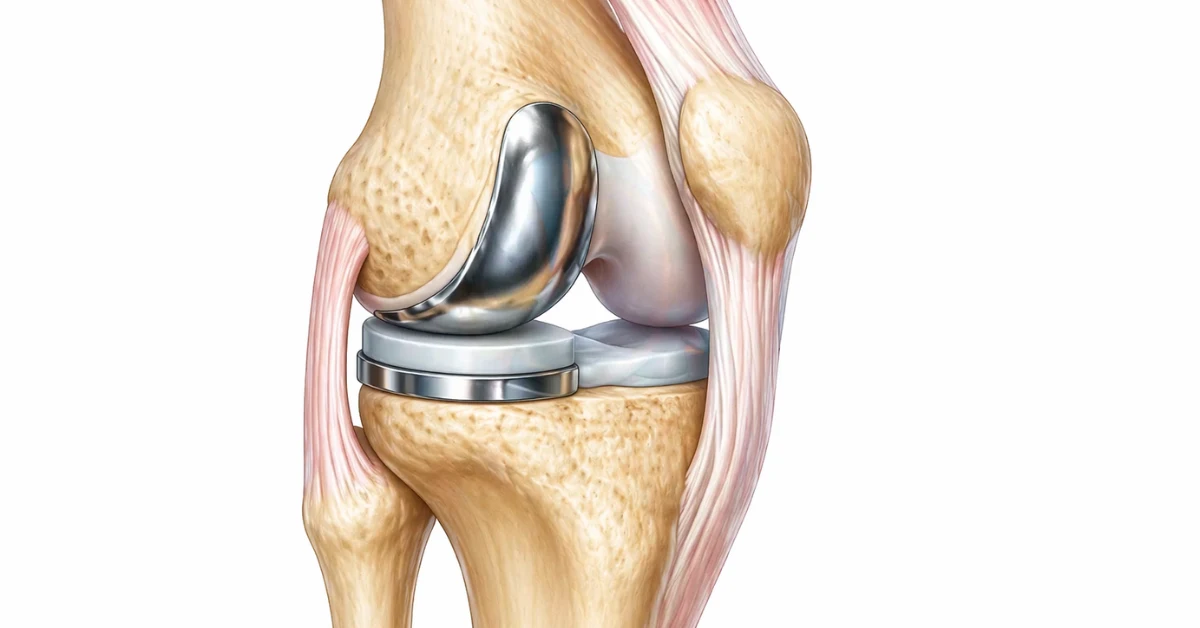
Partial knee replacement is different from total knee replacement because it replaces only the affected compartment while preserving the healthy portions of the joint where possible. At MAHI Hospitals in Chennai, patients can enquire about an orthopaedic consultation to understand the cause of their symptoms and discuss appropriate treatment options.
What is Partial Knee Replacement?
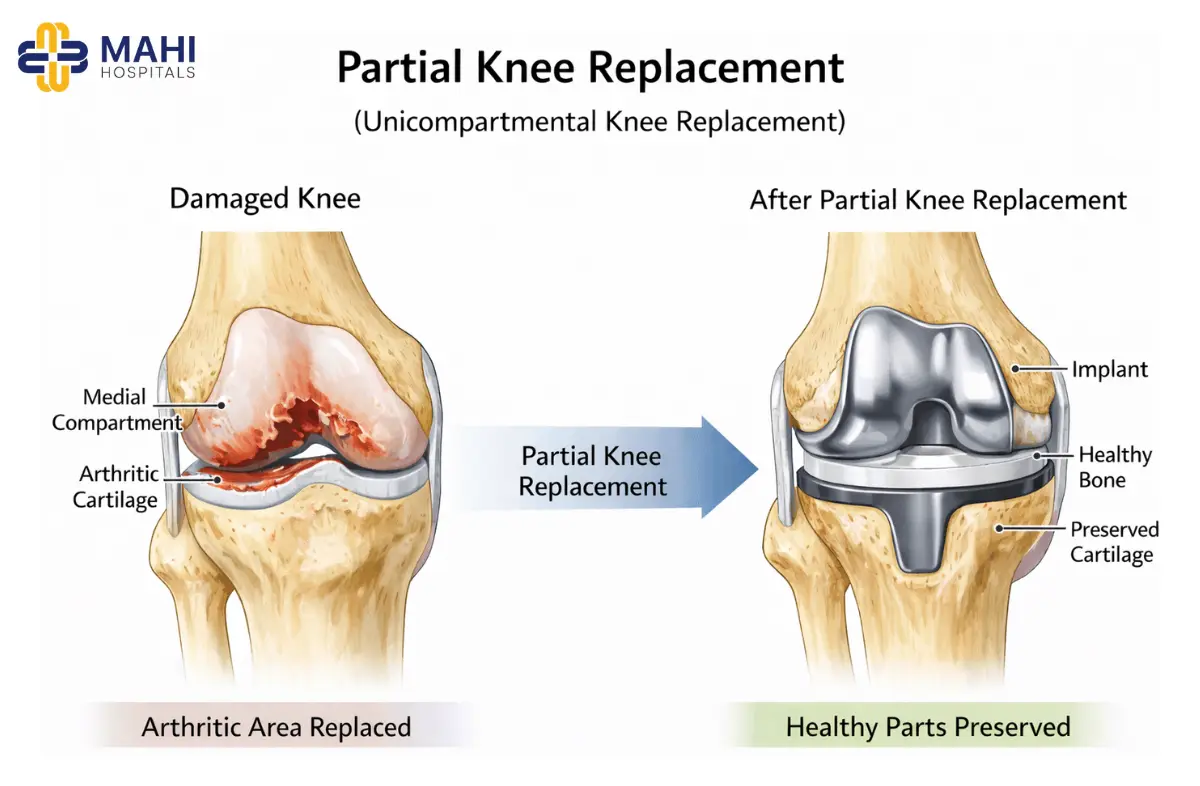
Partial knee replacement, also known as unicompartmental knee replacement, is a surgical procedure that replaces the damaged surfaces of one compartment of the knee with artificial components. The remaining healthy parts of the knee are preserved where appropriate.
The knee has three main compartments:
- Medial compartment: The inner side of the knee.
- Lateral compartment: The outer side of the knee.
- Patellofemoral compartment: The area between the kneecap and the thighbone.
The type of procedure considered depends on where the joint damage is located. Partial knee replacement is not suitable for every person with knee arthritis. The condition of the other compartments, ligaments, alignment and overall health must also be evaluated.
When May Partial Knee Replacement Be Considered?
An orthopaedic surgeon may discuss partial knee replacement when arthritis or cartilage damage is confined to one compartment and symptoms continue to affect everyday activities despite appropriate non-surgical treatment.
Symptoms that may prompt an assessment include:
- Persistent knee pain while walking or standing.
- Difficulty climbing or descending stairs.
- Stiffness that limits knee movement.
- Pain that interferes with routine activities.
- Limited improvement with suitable medication, physiotherapy or other recommended treatments.
These symptoms alone do not establish whether surgery is needed. An orthopaedic assessment, physical examination and appropriate imaging help determine the extent of joint damage and the available treatment options.
Who May Be Suitable for Partial Knee Replacement?
Suitability depends on the pattern and extent of arthritis, the condition of the remaining knee compartments, ligament function, knee alignment, medical history and activity needs.
Partial knee replacement may be considered when:
- Joint damage is mainly confined to one compartment.
- The remaining joint surfaces are sufficiently preserved.
- The knee ligaments provide appropriate stability.
- Symptoms significantly affect daily function.
- The potential benefits and risks are acceptable after clinical assessment.
If arthritis affects multiple compartments, or if other joint or ligament problems are present, total knee replacement or another treatment may be more appropriate. The decision should be individualised rather than based on age or symptoms alone.
Partial Knee Replacement vs Total Knee Replacement
The main difference is how much of the knee joint is replaced.
Partial knee replacement
- Replaces the affected compartment.
- Preserves healthy joint structures where possible.
- Requires careful assessment to confirm that the damage is sufficiently localised.
Total knee replacement
- Replaces the damaged joint surfaces across the knee more extensively.
- May be considered when arthritis affects multiple compartments.
- Has different surgical and rehabilitation considerations.
Partial knee replacement may allow a shorter recovery for appropriately selected patients, but this is not guaranteed. The choice depends on the patient's anatomy, arthritis pattern, health and treatment goals. Discuss the expected benefits, limitations and possibility of further surgery with the treating surgeon.
How Is Partial Knee Replacement Performed?
The exact surgical plan depends on the patient's condition and the procedure selected. It generally involves the following stages:
1. Preoperative assessment
The clinical team reviews symptoms, medical history, current medicines, previous treatments and imaging. Additional tests may be required to assess general health and suitability for surgery.
2. Anaesthesia and preparation
The anaesthesia team discusses suitable anaesthesia and pain-management options. The surgical team prepares the patient according to clinical protocols.
3. Replacement of the affected compartment
The surgeon removes the damaged joint surfaces in the affected compartment and positions artificial components. The remaining knee structures are preserved where appropriate.
4. Initial movement and rehabilitation
After surgery, the care team monitors recovery and helps the patient begin movement and walking when medically appropriate. A physiotherapist provides guidance based on the patient's progress.
Robotic-assisted or other surgical technologies may be available in some settings. Whether a particular technology is used depends on the procedure, available facilities and the surgeon's clinical assessment. Technology alone does not guarantee a particular outcome.
What are the Possible Risks?
Partial knee replacement is a surgical procedure and carries potential risks. These may include:
- Infection.
- Blood clots.
- Bleeding or wound-healing problems.
- Stiffness or persistent pain.
- Nerve or blood vessel injury.
- Implant wear, loosening or other implant-related problems.
- Progression of arthritis in another part of the knee.
- The need for further surgery, including conversion to total knee replacement.
The likelihood of complications varies between individuals. The surgeon should explain the risks relevant to the patient's medical history and the proposed procedure, along with available alternatives and steps used to reduce risk.
Recovery and Rehabilitation After Partial Knee Replacement
Recovery varies according to general health, surgical progress, pain, mobility and rehabilitation. Some patients may regain everyday function sooner after partial than total knee replacement, but an individual recovery timeline cannot be guaranteed.
Rehabilitation may include:
- Walking with assistance when advised by the clinical team.
- Exercises to improve knee movement and muscle strength.
- Following wound-care and medication instructions.
- Gradually increasing activity as advised.
- Attending follow-up appointments to monitor recovery.
The treating team will advise when it is appropriate to return to work, drive, climb stairs and resume other activities. Contact the clinical team promptly if you develop fever, increasing wound redness or discharge, worsening pain or swelling. Sudden chest pain or breathing difficulty after surgery requires emergency medical attention.
Preparing for a Partial Knee Replacement Consultation
To make the consultation more useful, bring:
- Previous knee X-rays, scans and medical reports.
- A list of current medicines and known allergies.
- Details of previous treatments, injections or physiotherapy.
- Information about existing medical conditions and previous surgeries.
- Questions about treatment alternatives, implant options, risks, recovery and follow-up.
Patients should also ask about the expected hospital stay, rehabilitation arrangements and estimated treatment costs. Costs may vary according to clinical needs, implant selection, hospital services and the care required.
Partial Knee Replacement at MAHI Hospitals, Chennai
- MAHI Hospitals is located at No. 118, Poonamallee High Road, Vepery, Chennai – 600084. Patients can contact the hospital to enquire about orthopaedic consultations and the availability of partial knee replacement services.Dr. Vijay Kumar Sohanlal is associated with orthopaedic and joint replacement care at MAHI Hospitals. His published professional profile lists MBBS and MS (Orthopaedics). Patients can discuss their symptoms, examination findings and treatment options with the clinical team.
A consultation can help determine whether partial knee replacement, total knee replacement or a non-surgical approach may be appropriate. The decision should be based on clinical findings, potential risks, expected benefits and the patient's preferences.
Frequently Asked Questions
Partial knee replacement is a surgical procedure that replaces the damaged surfaces of one compartment of the knee while preserving healthy structures where possible. It may be considered when joint damage is limited to a specific area.
People with arthritis mainly affecting one knee compartment may be considered. Suitability depends on imaging, ligament function, alignment, the condition of the remaining joint and overall health. An orthopaedic surgeon must assess each case.
Partial knee replacement treats the damaged compartment and preserves healthy parts of the knee where possible. Total knee replacement addresses the joint surfaces more extensively. The appropriate procedure depends on the extent and location of joint damage.
Operating time varies according to the patient’s condition, surgical plan and any additional clinical considerations. The hospital team can explain the expected schedule, including preparation, anaesthesia and postoperative monitoring.
Some patients begin supported walking soon after surgery when medically appropriate. The timing depends on recovery, balance, pain and the treating team’s assessment. Follow the prescribed walking plan and physiotherapy instructions.
Potential risks include infection, blood clots, stiffness, persistent pain, implant-related problems and progression of arthritis in other parts of the knee. Some patients may need further surgery. Discuss individual risks and alternatives with the surgeon.
Bring previous X-rays or scans, medical reports, current medication details, information about existing health conditions and records of previous treatments. Ask about suitability, alternatives, possible complications, rehabilitation and follow-up.
Latest Health Vlog Updates
Watch expert healthcare videos, medical insights, and wellness tips to stay informed and healthy.
Can I sit cross legged after knee replacement? Mahi Hospitals Chennai. Dr Vijay Sohanlal
Joint Replacement-ku அப்புறம் Implant எவ்வளவு நாள் Life இருக்கும் ? #jointreplacement
What Your Feet Reveal About Your Health! | Dr. Vijay Kumar Sohanlal
Mahi Hospitals Blasters are the Champions of Apna Club cricket premier league (ACCPL) 2026
மூட்டு மாற்று அறுவை சிகிச்சைக்கு பயமா? உண்மையை தெரிந்து கொள்ளுங்கள்! | Dr. Vijay Sohanlal
Smart hip replacement, Bipolar Hemiarthroplasty, Partial hip replacement, Dr Vijay kumar sohanlal
Fracture neck of femur and different surgeries | Total hip replacement | Bipolar hemiarthroplasty,
Fracture neck of femur and its treatment | Total hip replacement | Bipolar Hemiarthroplasty
Arthritis of Knee joint | Osteoarthritis | Mahi clinic | Dr Vijay Sohanlal | Total knee replacement
Arthritis of knee joint | Knee arthritis | Stages of knee arthritis | Total knee arthroplasty |
Knee strengthening exercise | knee pain | Dr Vijay sohanlal | Bilateral total knee replacement
Meniscal ligament tear and treatment | knee pain | knee arthroscopy | Meniscus | Dr Vijay sohanlal
Bilateral total Knee Replacement | Dr Vijay Kumar Sohanlal | TKR | Mahi clinic Chennai | mgm
Benefits of Platelet Rich Plasma (PRP) Injections! | Dr. Vijay Kumar Sohanlal
Waking up with Neck Pain? | Dr. Vijay Kumar Sohanlal
Steroids and Hip Pain! | Dr. Vijay Kumar Sohanlal
Need Help With Our Services?
Fill out the form and our patient care coordinators will get back to you within 24 hours to assist with appointments, queries, or any guidance you need.