

Mental-health concerns do not always arrive as a single, obvious problem. Sometimes it is persistent worry that will not settle, a change in mood that continues for weeks, difficulty sleeping, overwhelming thoughts, loss of interest in things you once enjoyed, or a noticeable change in how you function at work or home.
When these changes begin affecting everyday life, psychiatric care can help understand what may be happening and determine what kind of support is appropriate. Seeking help does not mean a person has to be in crisis or have a severe mental illness. It can simply be the right step when emotional or behavioural changes have become difficult to manage alone.
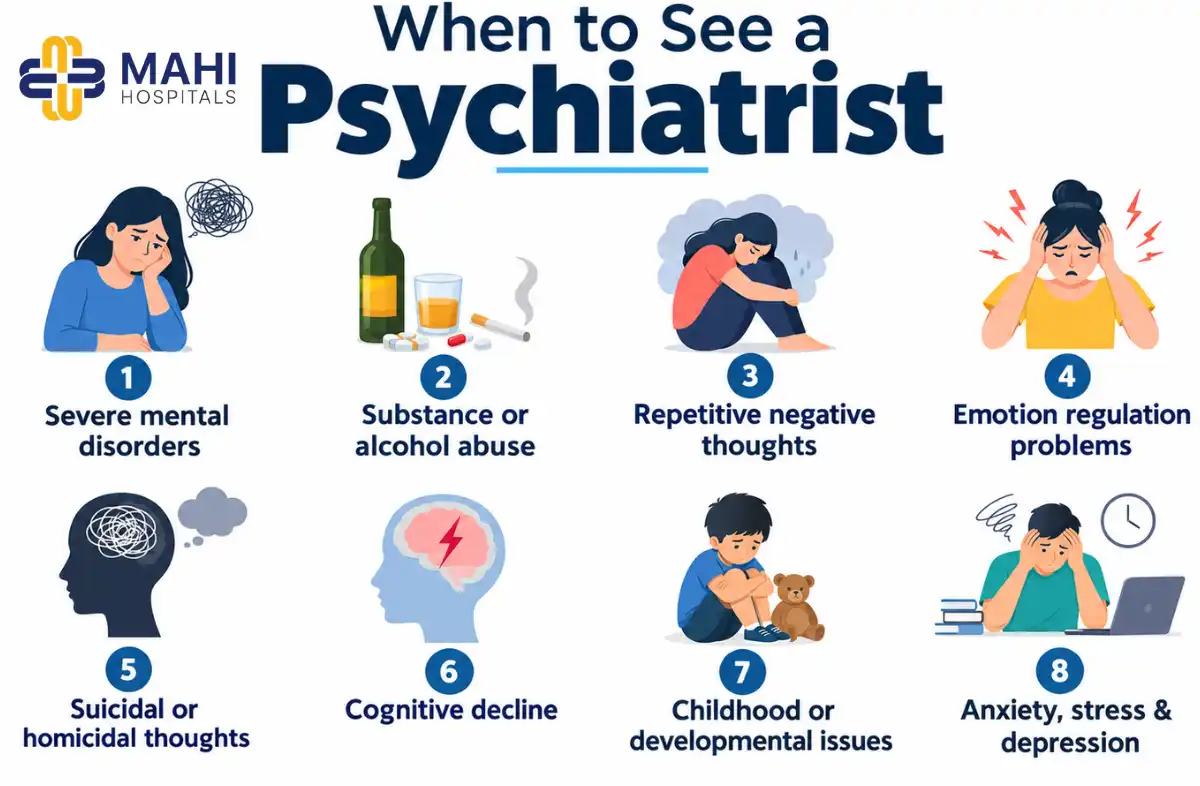
Everyone experiences stress, sadness, worry and changes in sleep from time to time. The concern becomes greater when these experiences persist, become more intense or start interfering with normal functioning.
You may notice:
These experiences do not automatically point to a particular psychiatric condition. They are reasons to consider professional assessment when they persist or interfere with daily life.
Psychiatry covers a broad range of mental-health conditions and concerns. A psychiatrist looks beyond an individual symptom to understand how different symptoms fit together and how they affect a person's overall functioning.
| Concern | How it may affect everyday life |
| Anxiety and persistent worry | Ongoing fear, restlessness, physical tension or difficulty concentrating |
| Depression and persistent low mood | Loss of interest, low energy, or changes in sleep and appetite |
| Mood-related conditions | Significant changes in mood, energy or behaviour |
| Sleep-related difficulties | Persistent difficulty falling asleep, staying asleep or feeling rested |
| Obsessive thoughts or repetitive behaviours | Thoughts or actions that become difficult to control |
| Stress-related concerns | Emotional or physical symptoms that begin interfering with normal functioning |
| Changes in perception or thinking | Experiences that may require prompt psychiatric assessment |
Experiencing one or more of these symptoms does not by itself mean that someone has a psychiatric disorder. A qualified professional considers the full clinical picture before reaching a diagnosis or recommending treatment.
You do not have to wait until emotional distress becomes overwhelming before seeking help.
A psychiatric assessment may be worth considering when symptoms:
An assessment does not automatically mean medication or long-term treatment. The first step is understanding what the person is experiencing and whether professional intervention is needed.
For many people, the hardest part of seeking psychiatric care is the first conversation. Concerns about being judged, misunderstood or immediately prescribed medication can make people postpone an appointment.
A psychiatric consultation is intended to build a clearer picture of the person's situation.
The psychiatrist may discuss:
The consultation is therefore more than simply describing symptoms and receiving a prescription. Understanding the person's circumstances helps the psychiatrist decide what form of care may be appropriate.
There is no single treatment plan that suits everyone. Depending on the condition, symptoms, severity, personal circumstances and response to care, treatment may involve one approach or a combination of several.
| Treatment approach | Role in care |
| Medication | May be recommended when the person's condition and symptoms are likely to benefit from medication. |
| Psychotherapy | Can help address thoughts, emotions, behaviours and coping patterns through structured psychological treatment. |
| Counselling and supportive care | May provide emotional support and practical strategies depending on the person's needs. |
| Lifestyle and behavioural changes | Sleep, routine, physical activity and stress-management strategies can complement clinical care. |
| Combined treatment | Some people may benefit from medication together with psychological therapy or other support. |
| Follow-up care | Allows progress, treatment response and concerns to be reviewed and the plan adjusted when necessary. |
The important point is that psychiatric treatment is individualised. Medication may be appropriate for some people, while others may benefit from psychological therapies, counselling, behavioural strategies or a combination.
These professionals can all contribute to mental-health care, but their roles, training and scope of practice are different.
| Professional | Primary role |
| Psychiatrist | A medical doctor specializing in mental health who can assess and treat psychiatric conditions and prescribe medication when appropriate. |
| Clinical psychologist | Focuses on psychological assessment and evidence-based psychological therapies within their professional scope. |
| Counsellor or therapist | Provides counselling or therapeutic support according to their professional training and scope of practice. |
Depending on the person's needs, different mental-health professionals may work together as part of a broader treatment plan.
Myth: “Seeing a psychiatrist means I must have a severe mental illness or take medication.”
Fact: Psychiatric care is not limited to severe mental illness, and treatment is not automatically the same for everyone. A psychiatrist first evaluates the person's symptoms, functioning and overall situation before deciding whether medication, psychotherapy, counselling, behavioural support or another approach is appropriate.
Seeking an assessment does not mean you have already committed to a particular treatment. It is first about understanding what is happening and identifying appropriate next steps.
Choosing psychiatric care involves more than finding a clinic that is close to home. Because mental-health treatment may involve sensitive conversations and follow-up, the environment and continuity of care can matter alongside convenience.
When considering psychiatry treatment in Chennai, it can be useful to look for:
| What to consider | Why it matters |
| Appropriate psychiatric assessment | A clear understanding of the problem is the foundation for deciding on suitable treatment. |
| Privacy and comfort | Patients may need to discuss highly personal experiences openly. |
| Continuity of care | Follow-up allows symptoms, treatment response and concerns to be reviewed over time. |
| Access to related specialties | Some emotional or behavioural symptoms can overlap with physical-health conditions. |
| Clear communication | Understanding the treatment plan and next steps can make ongoing care easier to follow. |
| Accessibility within Chennai | A convenient location can make regular consultations and follow-up more practical. |
| Urgent support when required | Severe mental-health symptoms may require prompt medical attention rather than routine follow-up. |
If treatment requires several consultations, choosing a care setting that is practical to reach can make consistent follow-up easier to maintain.
Mental-health concerns deserve the same thoughtful medical attention as physical-health problems. You do not have to wait until symptoms become overwhelming before asking for help. Recognizing persistent changes in mood, behaviour, sleep, thinking or everyday functioning can be an important first step towards understanding what is happening.
Psychiatric treatment is not a one-size-fits-all process. The appropriate approach depends on the person's symptoms, circumstances, clinical assessment and response to care. For some, this may involve medication; for others, psychotherapy, counselling, behavioural support or a combination may be more appropriate.
At MAHI Hospitals in Chennai, psychiatry is part of a multispecialty healthcare setting, with psychiatry currently listed among the hospital's specialties. MAHI describes its psychiatry care around therapy, counselling and personalized support for mental-health conditions, with its Chennai hospital located on Poonamallee High Road, Vepery.
When mental health begins affecting the way you think, feel, function or connect with others, seeking the right support is not a sign of weakness it is a step towards better health and a more manageable everyday life.
Psychiatrists assess and treat a wide range of mental-health conditions involving mood, anxiety, behaviour, thinking and perception.
No. Treatment depends on the individual’s condition and may involve medication, psychotherapy, counselling, behavioural strategies or a combination.
The psychiatrist discusses symptoms, their duration, daily functioning, medical history and other relevant factors before deciding what type of assessment or treatment may be appropriate.
A psychiatrist is a medical doctor specialising in mental health, while a clinical psychologist primarily focuses on psychological assessment and therapy.
It varies considerably. Some concerns may improve with shorter-term support, while others require ongoing treatment and follow-up.
Consider seeking an assessment when emotional, behavioural or psychological symptoms persist, interfere with daily life or become increasingly difficult to manage.
Yes, this is very common. Feeling anxious about a first visit is natural, and psychiatrists are experienced in helping patients feel comfortable discussing sensitive topics.
Watch expert healthcare videos, medical insights, and wellness tips to stay informed and healthy.
Fill out the form and our patient care coordinators will get back to you within 24 hours to assist with appointments, queries, or any guidance you need.