Hip Replacement Surgery
Introduction
For many people, hip pain doesn’t begin with a sudden injury. It starts quietly: a slight discomfort while climbing stairs, stiffness after sitting for long periods, or an occasional ache after a short walk. Over time, these seemingly minor symptoms can become persistent, turning everyday activities into daily challenges. Simple moments like getting out of bed, driving to work, shopping for groceries, or spending time with family may gradually become more difficult than they once were.
While medications, lifestyle modifications, and physiotherapy can effectively manage mild to moderate hip problems, they may no longer provide meaningful relief once the joint has suffered significant damage. At this stage, continuing to live with pain often means compromising mobility, independence, and overall quality of life. Fortunately, advances in orthopedic care have transformed the way severe hip conditions are treated. Modern hip replacement surgery is designed not only to relieve chronic pain but also to restore movement, improve stability, and help patients regain the confidence to return to their everyday routines. With improved surgical techniques, durable implants, and comprehensive rehabilitation programs, recovery today is safer, faster, and more predictable than ever before.
For individuals exploring hip replacement surgery in Chennai, the city offers access to experienced orthopedic surgeons, advanced medical infrastructure, and patient-focused rehabilitation programs that support every stage of treatment, from diagnosis to long-term recovery.
If you’re considering surgery for yourself or someone you love, understanding when it’s needed, how the procedure works, what it may cost, and what to expect throughout the journey can help you make an informed decision with confidence.
Why Choose Chennai for Hip Replacement Surgery?
Choosing to undergo hip replacement is a significant decision, but selecting where you receive treatment can be equally important. The quality of surgical expertise, hospital infrastructure, rehabilitation support, and postoperative care all contribute to the overall outcome.
Over the years, Chennai has established itself as one of India's leading destinations for advanced orthopedic care. Patients from across Tamil Nadu, neighboring states, and many international locations travel here because of the city's reputation for delivering high-quality joint replacement treatment backed by experienced specialists and modern healthcare facilities.
Expertise That Comes with Experience
Hip replacement is a highly specialized procedure where surgical precision plays a critical role in restoring natural joint function. Chennai is home to orthopedic surgeons who routinely perform primary and complex hip replacement procedures, enabling them to manage a wide range of conditions with confidence and clinical expertise.
Advanced Technology That Supports Better Outcomes
Modern orthopedic hospitals in Chennai are equipped with sophisticated diagnostic imaging, advanced operating theatres, high-quality implant systems, and minimally invasive surgical techniques whenever clinically appropriate. These advancements help improve surgical accuracy while supporting smoother recovery and long-term implant performance.
Rehabilitation That Continues Beyond Surgery
Successful hip replacement extends far beyond the operating room. Comprehensive rehabilitation programs involving orthopedic specialists, physiotherapists, rehabilitation experts, and pain management teams help patients gradually regain strength, balance, flexibility, and confidence throughout their recovery.
Comprehensive, Patient-Centered Care
One of Chennai's greatest strengths is its multidisciplinary approach to treatment. Patients benefit from coordinated care delivered by orthopedic surgeons, anesthesiologists, physicians, nursing teams, and rehabilitation professionals who work together to ensure continuity of care before, during, and after surgery.
Trusted Healthcare with Global Standards
Chennai has earned the trust of patients not only because of its medical expertise but also because it consistently delivers high standards of patient safety, evidence-based treatment protocols, and comprehensive postoperative follow-up. Combined with comparatively affordable treatment costs, this makes the city a preferred destination for advanced orthopedic procedures.
What is Hip Joint Replacement Surgery?
Understanding the procedure often makes the decision to pursue treatment less overwhelming.
Hip replacement surgery, also known as hip arthroplasty or hip joint replacement, is performed to relieve chronic pain and restore normal joint function when the natural hip has been severely damaged by arthritis, injury, or other degenerative conditions.
The hip is one of the body's largest weight-bearing joints. It functions as a ball and socket mechanism, allowing smooth movement during walking, bending, climbing stairs, and countless other daily activities. Healthy cartilage acts as a protective cushion between the bones, enabling them to move effortlessly without friction.
When this cartilage gradually wears away due to conditions such as osteoarthritis, rheumatoid arthritis, avascular necrosis, or traumatic injury, the bones begin rubbing directly against one another. This causes persistent pain, stiffness, inflammation, and progressive loss of mobility.
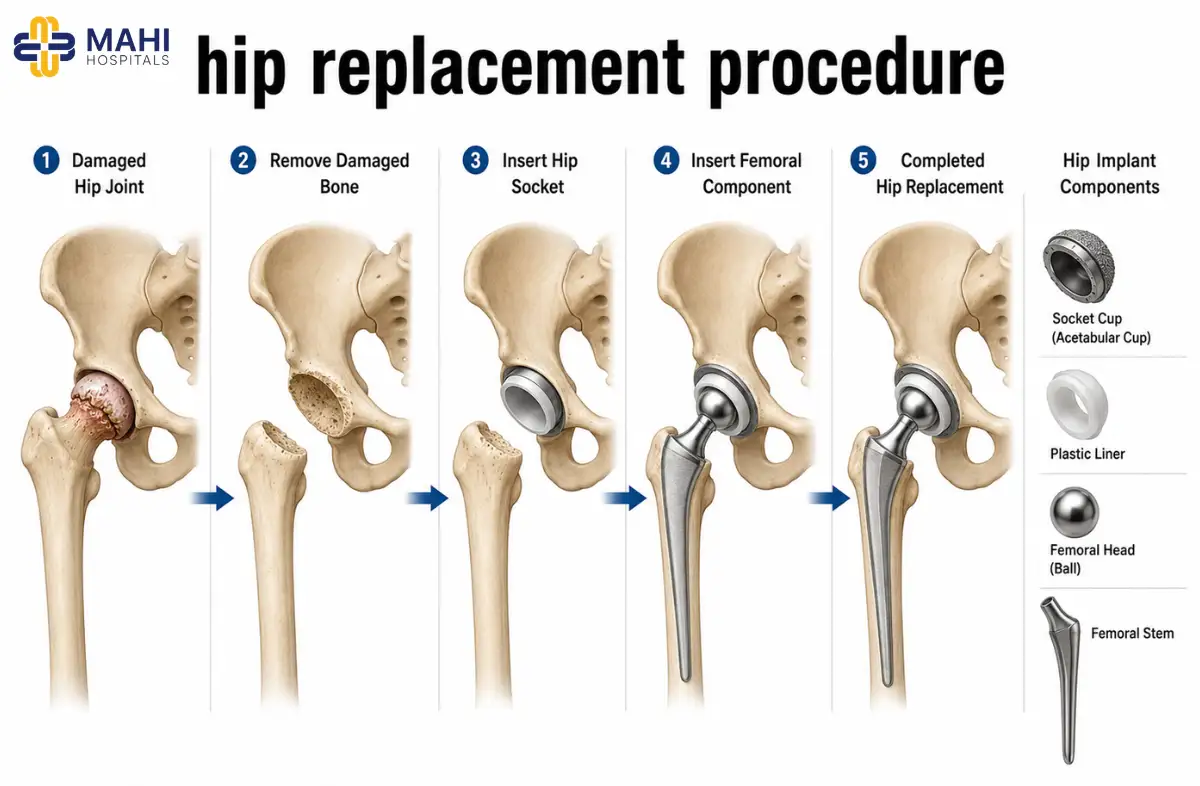
Hip replacement surgery addresses this problem by removing the damaged portions of the joint and replacing them with carefully designed artificial components made from durable medical-grade materials such as metal, ceramic, or highly specialized polyethylene. These implants are engineered to replicate the natural movement of the hip while improving stability and significantly reducing pain.
The objective of the procedure extends beyond replacing a damaged joint. It is about restoring the ability to move comfortably, participate in everyday activities, and regain the independence that chronic hip pain often takes away.

When Do You Need Hip Replacement Surgery?
One of the most common misconceptions is that hip replacement should only be considered when the pain becomes unbearable. In reality, orthopedic specialists evaluate how much the condition interferes with your daily life rather than relying solely on pain intensity.
Many patients unknowingly adapt to worsening hip disease over time. They begin avoiding stairs, limiting their walks, relying more heavily on the opposite leg, or giving up hobbies they once enjoyed. These gradual lifestyle changes often indicate that the hip joint is no longer functioning as it should.
Signs You Are Ready for a Hip Replacement
You may benefit from an orthopedic evaluation if you experience:
- Persistent hip or groin pain that continues despite medications, physiotherapy, or lifestyle modifications.
- Difficulty walking, standing for long periods, climbing stairs, or performing routine household activities.
- Stiffness that makes everyday movements such as sitting, bending, or putting on footwear increasingly difficult.
- Pain that disturbs your sleep or continues even while resting.
- Reduced range of motion that limits your independence.
- Increasing dependence on walking aids such as a cane or walker.
- Imaging studies showing advanced cartilage loss or significant joint damage.
The decision to proceed with surgery is never based on a single symptom. Instead, your orthopedic surgeon carefully considers the severity of joint damage, your overall health, activity level, treatment history, and the impact your condition has on your quality of life before recommending hip replacement.
Types of Hip Replacement Surgery

No two patients experience hip disease in exactly the same way. For this reason, hip joint replacement procedures are carefully tailored to the individual's diagnosis, anatomy, lifestyle, and long-term mobility goals rather than following a one size fits all approach.
After a detailed clinical evaluation and imaging assessment, your orthopedic surgeon recommends the procedure most likely to restore joint function while supporting a safe recovery and durable long-term results.
Total Hip Replacement
Total hip replacement is the most frequently performed procedure for advanced arthritis and severe joint degeneration. During surgery, both the damaged ball of the femur and the socket of the pelvis are replaced with artificial components that closely replicate the movement of a healthy hip joint.
For patients experiencing persistent pain, stiffness, and significant limitations in daily activities, this procedure offers the greatest potential for lasting pain relief and improved mobility.
Partial Hip Replacement
Partial hip replacement, also known as hemiarthroplasty, involves replacing only the ball portion of the hip joint while preserving the natural socket. It is commonly recommended for selected hip fractures, particularly in older adults whose socket remains healthy.
Revision Hip Replacement
In some situations, an existing artificial hip may require replacement because of implant wear, loosening, infection, instability, or other complications. Revision hip replacement is a more complex procedure that requires advanced surgical planning and considerable orthopedic expertise to restore joint stability and function.
Minimally Invasive Hip Replacement
Whenever appropriate, surgeons may perform hip replacement using minimally invasive techniques that reduce disruption to surrounding muscles and soft tissues. Depending on the patient's condition, this approach may contribute to less postoperative discomfort, smaller incisions, earlier mobility, and a quicker initial recovery.
However, minimally invasive surgery is not suitable for everyone. The choice of technique is always determined by what offers the safest and most effective outcome for the individual patient.
Cost of Hip Replacement Surgery in Chennai
The cost of hip replacement surgery in Chennai is one of the most common questions patients ask while planning their treatment, and understandably so: it helps them prepare both financially and mentally for the journey ahead. The overall cost varies from patient to patient because it depends on several individual factors rather than a single fixed price.
Some of the factors that typically influence the cost of hip replacement surgery include:
- The type of procedure recommended: total, partial, revision, or minimally invasive hip replacement.
- The choice of implant, including the material and design best suited to the patient's anatomy and activity level.
- The complexity of the case, such as revision surgery or the presence of additional medical conditions.
- The hospital's infrastructure, surgical technology, and the experience of the orthopedic team.
- The length of hospital stay and the extent of postoperative rehabilitation required.
Because pricing depends on these individual factors, it is best determined only after a detailed consultation and evaluation with an orthopedic surgeon. Many hospitals in Chennai also offer transparent cost estimates and guidance on insurance coverage, helping patients plan their treatment with clarity and confidence.
Benefits of Hip Replacement Surgery
Deciding to undergo hip replacement surgery is a significant milestone, and it's natural to wonder whether the results truly justify the procedure. While every patient's recovery journey is unique, the goal extends far beyond replacing a damaged joint. The real success of hip replacement lies in helping people reclaim the everyday moments that chronic pain gradually takes away.
For many patients, the most meaningful improvement isn't simply walking without discomfort. It's returning to a lifestyle that once seemed out of reach.
Lasting Relief from Chronic Pain
Severe arthritis and joint degeneration often cause persistent pain that interferes with even the simplest daily activities. By replacing the damaged surfaces of the joint, hip replacement addresses the underlying cause of pain rather than simply managing its symptoms, allowing most patients to experience significant and long-lasting relief.
Greater Freedom of Movement
As pain decreases and joint function improves, movements that once felt difficult, such as climbing stairs, getting into a car, standing for longer periods, or walking moderate distances, often become considerably easier. Improved mobility helps patients perform everyday activities with greater comfort and confidence.
Rediscovering Everyday Independence
One of the most rewarding aspects of successful hip replacement is the return to normal living. Many patients regain the ability to shop independently, travel comfortably, enjoy family outings, or participate in hobbies they had gradually given up because of persistent hip pain.
Better Sleep and Emotional Well-being
Living with chronic pain doesn't only affect physical health. It can also disturb sleep, reduce energy levels, and impact emotional well-being. As mobility improves and discomfort decreases, many patients report better sleep, improved confidence, and a renewed sense of independence.
Improved Long-Term Quality of Life
Modern hip implants are designed for durability and reliable performance. When combined with appropriate rehabilitation, regular follow-up, and a healthy lifestyle, hip replacement can provide years of improved mobility, allowing patients to remain active and engaged in everyday life.
Who Is an Ideal Candidate for Hip Replacement Surgery?
Many people believe hip replacement is only meant for older adults or should be considered only after years of unbearable pain. In reality, the decision is based on how severely the damaged joint affects your mobility, independence, and overall quality of life, not simply your age.
You may be a suitable candidate if you:
- Experience persistent hip pain despite medications, physiotherapy, and lifestyle modifications.
- Have advanced osteoarthritis, rheumatoid arthritis, avascular necrosis, or severe joint degeneration.
- Find it increasingly difficult to walk, climb stairs, stand for extended periods, or perform routine daily activities.
- Experience pain even while resting or during the night.
- Show significant joint damage on imaging studies.
- Notice that hip pain is limiting your independence, work, or participation in activities you once enjoyed.
Ultimately, the decision is made after a comprehensive evaluation by an orthopedic specialist, who considers your symptoms, medical history, imaging findings, activity level, and treatment goals before recommending surgery.
Choosing the Right Hospital for Hip Replacement Surgery in Chennai
Choosing the right hospital is one of the most important decisions in your treatment journey. While advanced technology certainly contributes to successful outcomes, it is the combination of experienced specialists, evidence-based protocols, comprehensive rehabilitation, and patient-centered care that truly makes a difference.
When comparing hospitals for hip replacement surgery in Chennai, consider the following:
Experienced Orthopedic Team
Hospitals where surgeons routinely perform primary and complex hip replacement procedures often develop standardized clinical pathways that support consistent, high-quality outcomes.
Advanced Surgical Infrastructure
Modern operating theatres, sophisticated diagnostic imaging, high-quality implant systems, and stringent infection-control measures contribute to safer procedures and improved recovery.
Integrated Rehabilitation Services
Recovery continues long after surgery. Hospitals that provide coordinated physiotherapy, rehabilitation specialists, pain management, and structured follow-up care help patients regain mobility more efficiently.
Multidisciplinary Care
The best orthopedic care is collaborative. Experienced surgeons work alongside anesthesiologists, physicians, nurses, physiotherapists, and rehabilitation experts to deliver seamless care before, during, and after surgery.
Transparent Patient Communication
A trusted healthcare team ensures patients understand their diagnosis, available treatment options, expected recovery, potential risks, and postoperative care. Clear communication empowers patients to make informed decisions with confidence.
Why Your Orthopedic Surgeon's Experience Matters
Every hip replacement is unique. Differences in anatomy, bone quality, underlying medical conditions, and lifestyle require careful planning that extends well beyond the operating room.
An experienced orthopedic surgeon evaluates each patient's condition individually, selects the most appropriate implant, plans the procedure with precision, and performs surgery in a way that optimizes joint alignment, stability, and long-term function.
Their role continues throughout recovery by monitoring healing, guiding rehabilitation, and addressing concerns before they become complications. This continuity of care plays a significant role in helping patients achieve the best possible outcome.
While modern technology has transformed joint replacement surgery, clinical expertise, thoughtful decision-making, and meticulous surgical technique remain the foundation of successful treatment.
Meet Our Orthopedic Surgeon in Chennai
At MAHI Hospitals , the Orthopaedic and Joint Care team is led by Dr. Vijay Kumar Sohanlal, an orthopedic surgeon with decades of experience in advanced joint replacement, including hip, knee, and shoulder procedures. His approach combines precise surgical technique with a structured, patient-focused rehabilitation plan, helping patients regain mobility, strength, and a pain-free life after hip replacement surgery.
Patients considering hip replacement surgery in Chennai can consult the team at MAHI Hospitals for a detailed evaluation, a clear explanation of suitable treatment options, and guidance on the cost of hip replacement surgery based on their individual condition.
What to Expect at Hip Replacement Surgery
Understanding each stage of treatment often helps patients approach surgery with greater confidence and realistic expectations.
Before Surgery
Your orthopedic team begins with a detailed assessment that includes clinical examination, imaging studies, routine investigations, and evaluation of your overall health. You'll also receive guidance regarding medications, nutrition, home preparation, and preoperative exercises that support a smoother recovery.
Hip Replacement: How is it Performed?
The procedure is performed under carefully monitored anesthesia. The damaged portions of the hip joint are removed and replaced with durable artificial components that are designed to restore smooth, stable movement. Throughout the procedure, every step focuses on precision, patient safety, and optimal implant positioning.
After Surgery
Recovery begins shortly after surgery. Early mobilization under the supervision of physiotherapists encourages circulation, reduces the risk of complications, and supports faster functional recovery. As healing progresses, structured rehabilitation gradually improves strength, flexibility, balance, and walking ability, helping patients return to their daily routines with confidence.
Recovery Timeline
Every patient's recovery progresses at a different pace, but understanding the general timeline helps set realistic expectations.
- First 24 to 48 Hours – Pain is carefully managed, and assisted standing or walking usually begins under professional supervision.
- Weeks 1 to 2 – Mobility steadily improves, and many patients become increasingly comfortable performing basic daily activities with support.
- Weeks 3 to 6 – Continued physiotherapy enhances strength, flexibility, and balance while allowing a gradual return to light routine activities.
- 6 to 12 Weeks – Most patients experience significant improvements in mobility and are able to resume many everyday activities independently.
- 3 to 6 Months – Ongoing rehabilitation continues to improve endurance, stability, and overall joint function, allowing a more active lifestyle.
The pace of recovery depends on factors such as age, general health, adherence to physiotherapy, and the condition of the joint before surgery.
Why Patients Choose Chennai for Hip Replacement Surgery
For many individuals, the decision to travel for treatment is driven by one important question: Where can I receive safe, reliable, and comprehensive orthopedic care?
Over the years, Chennai has become one of India's most trusted centers for hip replacement surgery by consistently delivering high standards of clinical excellence and patient-focused care.
Patients choose Chennai because the city offers:
- Experienced orthopedic surgeons with expertise in primary and complex joint replacement procedures.
- Advanced hospitals equipped with modern surgical infrastructure and internationally accepted treatment protocols.
- Comprehensive rehabilitation programs that support recovery beyond the operating room.
- Multidisciplinary teams committed to personalized patient care.
- Strong emphasis on patient safety, infection prevention, and long-term follow-up.
- Convenient accessibility for patients from across Tamil Nadu, other Indian states, and international destinations.
- High-quality orthopedic care that combines advanced treatment with excellent value.
Rather than focusing solely on the procedure itself, Chennai's healthcare ecosystem emphasizes complete recovery, helping patients regain mobility, confidence, and long-term quality of life.
Conclusion
Living with chronic hip pain often means adapting your life around discomfort: walking less, avoiding stairs, missing family activities, or giving up the hobbies you once enjoyed. Over time, these compromises can affect far more than physical mobility; they can gradually diminish independence and overall well-being.
Hip replacement surgery offers more than a solution for a damaged joint. For appropriately selected patients, it provides an opportunity to move with greater comfort, regain confidence, and return to the everyday experiences that make life fulfilling.
If persistent hip pain continues to interfere with your daily activities despite conservative treatment, consulting an experienced orthopedic specialist is an important first step. An accurate diagnosis, personalized treatment plan, and timely intervention can help you make informed decisions and move toward a future defined by mobility rather than limitations.
Every confident step begins with the decision to stop living around pain and start moving toward recovery.
Frequently Asked Questions
Most procedures take one to two hours, although the total hospital stay depends on your overall health, preparation, and postoperative recovery.
Many patients resume routine daily activities within 6 to 12 weeks, while complete recovery and continued functional improvement may take several months.
Yes. Hip replacement is considered one of the most successful orthopedic procedures when performed by experienced surgeons using modern surgical techniques and comprehensive postoperative care.
Modern implants commonly last 15 to 20 years or longer, depending on individual factors such as activity level, bone health, implant type, and adherence to follow-up care.
Yes. Physiotherapy is an essential part of recovery and helps restore strength, flexibility, balance, and normal walking patterns while improving long-term joint function.
Most patients are able to return to walking, driving, climbing stairs, and many routine daily activities after recovery. Your orthopedic surgeon will advise you on when it is safe to resume specific activities.
Related Blogs
Latest Health Vlog Updates
Watch expert healthcare videos, medical insights, and wellness tips to stay informed and healthy.
Knee Implant குறித்து பயமா?? இந்த Video-a பாருங்க!
Smart hip replacement, Bipolar Hemiarthroplasty, Partial hip replacement, Dr Vijay kumar sohanlal
Fracture neck of femur and different surgeries | Total hip replacement | Bipolar hemiarthroplasty,
Fracture neck of femur and its treatment | Total hip replacement | Bipolar Hemiarthroplasty
Arthritis of Knee joint | Osteoarthritis | Mahi clinic | Dr Vijay Sohanlal | Total knee replacement
Arthritis of knee joint | Knee arthritis | Stages of knee arthritis | Total knee arthroplasty |
Knee strengthening exercise | knee pain | Dr Vijay sohanlal | Bilateral total knee replacement
Meniscal ligament tear and treatment | knee pain | knee arthroscopy | Meniscus | Dr Vijay sohanlal
Bilateral total Knee Replacement | Dr Vijay Kumar Sohanlal | TKR | Mahi clinic Chennai | mgm
Revision knee replacement in an agriculturist
Benefits of Platelet Rich Plasma (PRP) Injections! | Dr. Vijay Kumar Sohanlal
Waking up with Neck Pain? | Dr. Vijay Kumar Sohanlal
Steroids and Hip Pain! | Dr. Vijay Kumar Sohanlal
First Aid For Broken Bones and Fractures! | Dr. Vijay Kumar Sohanlal
Weight Reduction ✅ | Dr. Vijay Kumar Sohanlal
What is Arthritis? | Dr. Vijay Kumar Sohanlal
Need Help With Our Services?
Fill out the form and our patient care coordinators will get back to you within 24 hours to assist with appointments, queries, or any guidance you need.