

Medically Reviewed by Dr. Vijay Kumar Sohanlal, MBBS, MS (Orthopaedics), Orthopaedic & Joint Replacement Surgeon, Founder & Owner of MAHI Multispeciality Hospitals, Kilpauk, Chennai
Last medically reviewed: August 2026
Most people don’t think about their knees until one of them stops cooperating. A missed step on the stairs. A twinge that shows up after a long walk and doesn’t go away by morning. For a lot of patients we see, it starts small, and small is exactly why it gets ignored for months before anyone books an appointment.
That’s usually a mistake, and here’s why: knee pain that feels identical on the surface can come from completely different problems underneath. A 45-year-old with early cartilage wear and a 28-year-old cricketer with a ligament sprain might both describe “pain going up the stairs,” but what fixes one won’t fix the other, and treating the wrong thing wastes time the knee doesn’t have.
So the real starting point for knee pain treatment in Chennai isn’t a procedure. It’s a diagnosis.
Quick Answer
There is no single best treatment for knee pain, as the right approach depends on the underlying cause and individual condition. Many patients improve with conservative options such as physiotherapy, appropriate medication, weight management, and lifestyle or activity modifications. Some may require advanced treatments when there is significant cartilage damage, ligament injury, or arthritis that does not respond to these measures. For those looking for knee pain treatment in Chennai, a proper orthopedic evaluation can help identify the cause and determine the most suitable treatment.
Why the Cause Matters More Than the Symptom
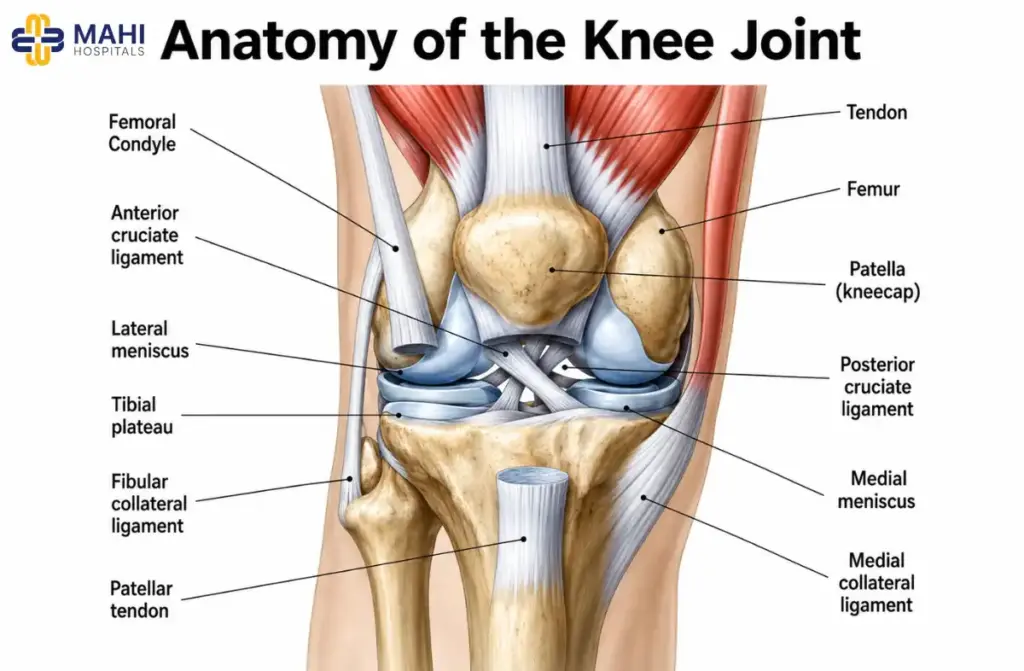
The knee is doing a lot of quiet work every time you take a step: bone, cartilage, ligament, tendon, and muscle all have to move together in the right order. When one part of that system is off (worn cartilage, an inflamed tendon, a torn meniscus), pain shows up as the symptom, not the diagnosis.
That’s the trap. Two patients can walk in with nearly the same complaint and walk out with completely different treatment plans, because what’s actually wrong inside the joint isn’t the same. Chasing pain relief without knowing the cause tends to produce short-term fixes that wear off, and sometimes it delays catching something that needed earlier attention.
When to Actually See an Orthopedic Specialist
Not every ache needs a doctor. A knee that’s sore after an unusually long walk, or a bit stiff after sitting too long, often settles on its own with rest and common sense. But a few signs mean it’s worth getting looked at rather than waiting it out:
- Pain that’s stuck around for weeks and isn’t improving with rest
- Trouble with stairs, standing up from a chair, or standing for any length of time
- Swelling that keeps coming back, or never fully goes down
- A knee that locks, catches, or clicks in a way that interrupts movement
- A feeling that the knee might buckle or give way
- Losing the ability to fully bend or straighten it
- Pain that’s started eating into sleep, work, or exercise
Seeing a specialist doesn’t mean surgery is coming. Most of the time it’s the opposite: catching a problem early is what keeps surgery off the table.
What’s Actually Causing the Pain?
Osteoarthritis
This is the one we see most often. Cartilage is meant to act as a cushion between the bones: smooth, shock-absorbing, quiet. As it wears down over the years, that cushioning effect drops off, and the joint starts complaining about things it used to handle without a thought, like stairs, long walks, and getting up after sitting.
Common signs include stiffness first thing in the morning or after resting, pain that builds with activity, and swelling that shows up after a busy day. One thing worth knowing: X-ray severity and pain severity don’t always match. Someone with fairly advanced changes on imaging might have mild symptoms, and someone with early changes might be in real discomfort. That’s part of why a good evaluation looks at the whole person, not just the film.
Ligament, Meniscus, and Cartilage Injuries
These tend to show up differently, often suddenly, often tied to a specific moment: a fall, an awkward twist, a sports injury. The knee relies on ligaments for stability, the meniscus to absorb shock, and cartilage to keep the joint gliding smoothly. Damage to any of them tends to announce itself:
- Ligament injuries: instability, swelling, a knee that feels like it might give way
- Meniscus tears: locking, stiffness, difficulty fully straightening the leg
- Cartilage damage: a duller, more persistent discomfort during movement
- Overuse injuries: gradual irritation from repetitive stress, common in runners and physically demanding jobs
These usually call for a different diagnostic path than arthritis does, and the treatment decisions (rehab alone versus something more) hinge on getting that diagnosis right first.
Inflammatory Conditions
Not every painful knee is wear-and-tear or injury. Some conditions cause inflammation from the inside: swelling, warmth, tenderness, stiffness that doesn’t follow the usual mechanical pattern. These can look like arthritis early on, which is exactly why a proper clinical work-up matters. Treating an inflammatory condition like a mechanical one, or vice versa, rarely goes well.
How Daily Habits Shape Knee Health
The knee absorbs load with almost everything you do: walking, standing, climbing, even just shifting your weight. A few everyday factors have an outsized effect on how much stress the joint carries over time:
| Factor | Effect on the Knee |
| Body weight | Every extra kilo adds measurably to the load the knee carries with each step |
| Muscle strength | Strong quads, hamstrings, and glutes take pressure off the joint itself |
| Activity level | The right amount of movement keeps the joint healthy; too much repetitive strain can aggravate it |
| Movement mechanics | Poor form or repetitive occupational stress changes how force lands on the joint |
None of this replaces medical treatment, but ignoring it tends to undercut whatever treatment you do get.
Why Diagnosis Comes Before Treatment Decisions
A rushed diagnosis is how patients end up on the wrong treatment path. A proper evaluation typically draws on a few sources together, not any one alone:
| Step | What It Tells the Specialist |
| Medical history | When it started, past injuries, how it’s affecting daily life |
| Physical exam | Stability, swelling, strength, range of motion, gait |
| X-ray | Bone alignment, arthritis, fractures |
| MRI (if needed) | Soft tissue detail: ligaments, cartilage, meniscus, tendons |
Imaging is one piece of the picture, not the whole picture. Two patients with similar scans can need different treatment because their symptoms, activity level, and goals aren’t the same.
Treatment is Personal: Here’s What Actually Shapes the Plan
A young athlete and a 65-year-old grandmother with the same MRI finding often need entirely different treatment plans. What tends to actually drive the decision:
| Consideration | Why It Matters |
| Underlying cause | Arthritis, ligament injury, cartilage damage, and inflammation each need a different approach |
| Severity of joint changes | Guides how aggressive treatment needs to be |
| Age and activity level | A returning athlete and someone prioritizing daily mobility have different endpoints |
| Personal goals | Getting back to sport, working without pain, or simply staying independent all point to different plans |
| Overall health | Other conditions can rule certain treatments in or out |
| Response to prior treatment | What’s already been tried shapes what’s tried next |
Pain intensity alone doesn’t decide the plan. Two patients can both rate their pain 8/10: one improves substantially with physiotherapy because the cause is manageable, the other needs surgery because conservative care has already been tried and hasn’t been held. Same pain score, different reality underneath it.
Treatment Options, From Conservative to Advanced
Non-Surgical Treatment First
Most patients don’t need surgery, full stop. A structured combination of rehab, medication, and activity changes resolves a large share of knee pain cases, and even when surgery does end up being necessary later, going through conservative treatment first usually improves the outcome.
Physiotherapy and rehabilitation does more work than most patients expect going in. Weak muscles around the knee force the joint to absorb load it shouldn’t have to. A good rehab program typically covers:
- Strengthening the quadriceps, hamstrings, glutes, and core
- Improving flexibility and reducing stiffness
- Retraining balance and movement patterns
- A gradual, monitored return to normal activity
It’s not a generic set of exercises. A well-run program is built around how the whole leg works together, not just the sore joint.
Lifestyle changes support whatever medical treatment is underway:
- Managing weight to reduce load on the joint
- Low-impact exercise to keep strength up without adding stress
- Proper footwear
- Adjusting repetitive activities that flare symptoms
- Sticking with strengthening exercises even once the pain eases
When Advanced Treatment Gets Considered
If conservative treatment doesn’t move the needle, specialists look at additional options, but not by default, and not just because a procedure exists. The decision weighs the severity of damage, how much daily life is affected, what’s already been tried, overall health, and what the patient is hoping to get back to.
When Does Surgery Actually Come Up?
A lot of patients assume seeing a specialist means surgery is inevitable. It isn’t. Surgery gets considered when the evidence points to it being the treatment most likely to restore function, not as a default next step.
That usually means persistent symptoms that keep limiting walking, work, sleep, or independence despite genuinely trying conservative treatment first. The decision weighs:
| Factor | Why It Matters |
| Persistent symptoms | Shows whether current treatment is actually working |
| Extent of joint damage | Determines whether structural repair is needed |
| Response to prior treatment | Confirms conservative options have been fairly tried |
| Functional limitation | How much daily life is actually affected |
| Patient goals | Keeps the plan realistic and aligned with what the patient wants |
An X-ray or MRI alone never makes this call. It’s the combination of imaging, exam findings, symptoms, and the patient’s own goals that does.
What Recovery Actually Looks Like
Recovery isn’t a single event. It’s a process, whether it follows rehab, an injection, or surgery. Most patients move through recognizable stages:
- Pain and inflammation control: protecting the area while it settles
- Restoring movement: regaining flexibility and range of motion
- Rebuilding strength: reinforcing the muscles that support the joint
- Functional recovery: getting back to stairs, walking, work, exercise
- Long-term maintenance: keeping up the habits that protect the joint going forward
Patients who stay engaged with rehab, not just showing up but actually doing the work between sessions, tend to recover faster and more completely than those who treat it as a passive process.
Why Chennai for Knee Pain Treatment
Chennai has built up real depth in orthopedic care: experienced surgeons, solid diagnostic infrastructure, and rehabilitation services that go beyond a single clinic visit. That draws patients from well outside the city.
But the city matters less than the team. What actually determines your outcome is whether the specialist you choose prioritizes an accurate diagnosis and a plan built around you, rather than defaulting to whatever treatment they do most often.
Knee Care at MAHI, Chennai
At MAHI Hospitals, Orthopaedic and Joint Care, knee treatment is led by Dr. Vijay Kumar Sohanlal, an orthopaedic and joint replacement surgeon with international fellowship training in Germany and Australia, and prior leadership roles in orthopaedics at Medway Hospitals and MGM Healthcare. He focuses specifically on robotic and navigation-assisted joint replacement, knee and hip reconstruction, and orthopaedic trauma care.
That focus matters for how a first consultation actually goes. The conversation isn’t just about the X-ray; it’s about what the patient wants back. For one person that’s returning to badminton. For another it’s climbing stairs without wincing, or staying independent into their 70s. Those are different goals, and they lead to different plans.

Evaluation combines a clinical exam, imaging when it’s actually needed , a functional assessment, and a real conversation about what matters to the patient before any treatment is recommended. From there, care might mean rehabilitation, non-surgical management, or an advanced procedure, including robotic knee replacement where clinically appropriate, decided by the diagnosis, not a template.
Conclusion
Where a knee hurts tells you almost nothing. Why it hurts tells you everything. Arthritis, a ligament tear, cartilage damage, and inflammation can all produce similar pain, and treating the wrong one rarely goes well, even if it feels like progress at first.
Whatever the path, physiotherapy, lifestyle change, non-surgical care, or surgery, the goal stays the same: get back to moving comfortably, and keep the joint healthy enough that it stays that way. If you’re looking into knee pain treatment in Chennai, the thing to actually evaluate isn’t the clinic’s marketing. It’s whether they’re willing to diagnose before they prescribe.