
Medically Reviewed by Dr. Vijay Kumar Sohanlal, MBBS, MS (Orthopaedics), Orthopaedic & Joint Replacement Surgeon, Founder & Owner of MAHI Multispeciality Hospitals, Kilpauk, Chennai
Last medically reviewed: October 2026
Knee pain, stiffness and reduced mobility can affect walking, climbing stairs and everyday activities. These symptoms may be associated with osteoarthritis, rheumatoid arthritis, previous injuries or other knee joint conditions. A medical assessment can help identify the underlying cause and determine suitable treatment options.
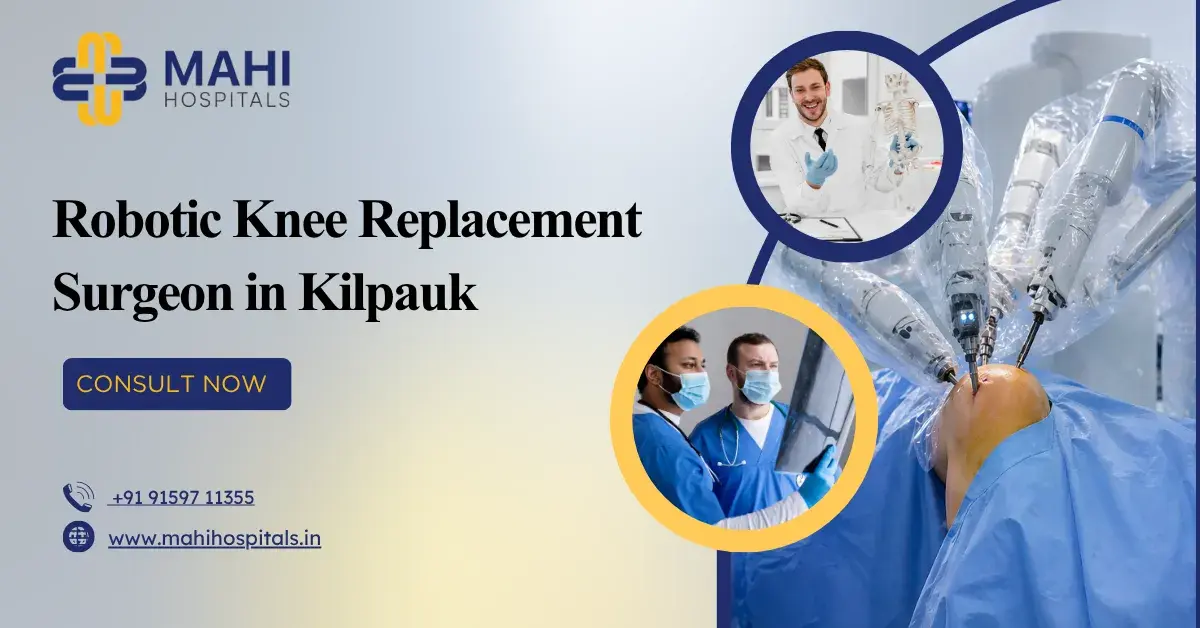
Robotic-assisted knee replacement is a surgical approach that uses computer-assisted planning and robotic technology to support selected aspects of knee replacement surgery. Patients seeking information about a robotic knee replacement surgeon in Kilpauk, Chennai, can contact MAHI Hospitals to enquire about orthopedic consultations, available procedures and appointment arrangements.
The suitability of surgery depends on the diagnosis, severity of joint damage, medical history and individual treatment needs.
Robotic knee replacement Surgeon in Kilpauk
MAHI Hospitals is a multispecialty hospital located on Poonamallee High Road, Purasaiwakkam, Chennai. Its orthopedic services include care related to bone and joint conditions. Patients can contact the hospital to confirm the availability of the relevant orthopedic specialist and surgical services.
Dr. Vijay Kumar Sohanlal is identified in the hospital’s professional profile as an orthopedic and joint replacement surgeon associated with MAHI Hospitals. His current qualifications, professional registration, hospital affiliation and experience with robotic-assisted knee replacement should be verified through official sources before publication.
An orthopedic consultation may involve reviewing symptoms, medical history, physical examination findings and relevant imaging. The treating doctor can discuss whether non-surgical management, conventional knee replacement or a robotic-assisted procedure may be appropriate.

What is Robotic-Assisted Knee Replacement?
Knee replacement surgery involves replacing damaged joint surfaces with artificial components. It may be considered for selected patients with advanced joint damage and persistent symptoms when appropriate non-surgical treatment has not provided sufficient relief.
Robotic-assisted knee replacement uses a computer-based system to support surgical planning and guide specific parts of the procedure. The surgeon remains responsible for clinical decisions and performing the operation.
Depending on the technology used, planning may incorporate information about the patient’s knee anatomy and joint alignment. The approach selected for each patient depends on clinical findings, the equipment available and the surgeon’s assessment.
Robotic assistance does not eliminate surgical risks or guarantee a particular outcome.
How Is Robotic-Assisted Knee Replacement Evaluated and Performed?
1. Initial Assessment
The doctor reviews knee pain, stiffness, mobility limitations, medical history and previous treatments. Physical examination and imaging, such as X-rays, may be used to assess joint damage.
2. Treatment Planning
The doctor discusses the diagnosis and available management options. These may include medication, physiotherapy, activity modification or surgical treatment, depending on the condition.
If knee replacement is being considered, the surgical plan is developed according to the patient’s anatomy, clinical findings and medical requirements.
3. Surgical Procedure
During robotic-assisted surgery, the system supports the surgeon with planning and guidance for selected surgical steps. The procedure is performed by the surgical team, with the approach determined by the individual treatment plan.
4. Postoperative Care
Following surgery, care may include pain management, monitoring, assisted movement and physiotherapy when medically appropriate. The treating team provides instructions regarding wound care, mobility, exercises and follow-up appointments.
Potential Benefits and Limitations
For appropriately selected patients, knee replacement may help reduce pain and improve joint function. The degree of improvement varies according to the patient’s condition, general health, surgical factors and rehabilitation.
Robotic-assisted systems may provide additional tools for planning and guiding certain aspects of a procedure. Their use does not guarantee less pain, fewer complications, faster recovery or a longer-lasting implant compared with other surgical approaches.
Patients should discuss the potential benefits, limitations, risks and alternatives with their treating surgeon before deciding on a procedure.
Who May Be Considered for Knee Replacement?
Knee replacement may be considered for patients with:
- Advanced knee osteoarthritis causing persistent symptoms.
- Significant joint damage affecting movement and daily activities.
- Knee pain that continues despite appropriate non-surgical management.
- Reduced mobility associated with a documented joint condition.
These factors do not automatically mean surgery is required. A clinical assessment is necessary to determine the diagnosis and identify suitable treatment options.
Recovery and Rehabilitation After Knee Replacement
Recovery differs between individuals. It may depend on the extent of joint disease, general health, the procedure performed and progress during rehabilitation.
Postoperative care may include:
- Assisted movement and walking when medically appropriate.
- Physiotherapy and prescribed exercises.
- Wound care and follow-up assessments.
- Guidance on daily activities and movement precautions.
- Monitoring for complications and review of recovery progress.
Patients should follow the instructions provided by their treating team. Recovery timelines and activity recommendations should be discussed individually rather than assumed to be the same for everyone.
Risks and Possible Complications
Knee replacement is a major operation and may involve risks such as infection, blood clots, bleeding, stiffness, persistent pain, implant-related problems, nerve or blood vessel injury and complications related to anaesthesia.
The risks vary depending on individual health factors and the procedure. Preoperative assessment helps the medical team evaluate relevant risks and plan appropriate care.
Patients should discuss possible complications, preventive measures, alternative treatments and postoperative care before providing consent for surgery.
What Should You Ask Before Knee Replacement Surgery?
Patients considering knee replacement may wish to discuss the following questions with their doctor:
- What is causing my knee symptoms?
- Are non-surgical treatments still appropriate?
- What are the differences between conventional and robotic-assisted surgery for my condition?
- What are the potential benefits, risks and limitations of each option?
- What implant and surgical approach are being considered?
- What rehabilitation and follow-up will be required?
- What are the estimated costs and applicable insurance arrangements?
These discussions can help patients understand the proposed treatment and make informed decisions based on their individual needs.
Orthopedic Care Near Kilpauk, Chennai
MAHI Hospitals is located at No. 118, Poonamallee High Road, Purasaiwakkam, Chennai – 600084. Patients travelling from Kilpauk, Chetpet, Egmore and nearby areas can check the route before visiting.
Contact the hospital to confirm orthopedic consultation availability, appointment timings and the services currently provided.
For hospital information, visit the official MAHI Hospitals website.
Conclusion
Knee pain and reduced mobility can have several causes, and appropriate assessment is important for identifying suitable treatment options. Depending on the diagnosis, management may include medication, physiotherapy, rehabilitation or knee replacement surgery.
Robotic-assisted knee replacement is one surgical approach that may be considered for selected patients. Decisions about surgery should be based on clinical assessment and an informed discussion of the potential benefits, risks, alternatives and recovery requirements.
Patients seeking orthopedic consultation in Kilpauk, Chennai, can contact MAHI Hospitals for current information about available services and appointments.
Read More: Indian Foods for Strong Bones.