
Knee pain is a widely experienced musculoskeletal issue that affects individuals across all age groups. Whether it is caused by injury, arthritis, or long-term wear and tear, persistent knee pain can significantly impact mobility, independence, and overall quality of life. In a fast-paced city like Chennai, where daily routines often involve long hours of standing, walking, or commuting, knee-related issues are increasingly prevalent, leading many patients to seek the best knee replacement surgeon in Kilpauk for expert evaluation and effective treatment options.
Modern orthopaedic advancements have transformed the way knee conditions are treated. From conservative management like physiotherapy and medication to advanced surgical interventions such as robotic-assisted knee replacement, patients today have access to highly effective solutions. Early diagnosis and timely treatment play a crucial role in preventing further joint damage and restoring function.
For patients searching for the best knee doctor in Egmore or a trusted knee specialist in Purasawalkam, choosing an experienced orthopaedic expert is essential. The right surgeon not only ensures accurate diagnosis but also recommends the most suitable treatment plan tailored to the patient’s lifestyle and condition.
What is Knee Replacement Surgery?
Knee pain has a way of creeping into every corner of your life. It starts as mild discomfort when you climb stairs, and before long, even walking to the kitchen becomes something you dread. If you’ve reached a point where painkillers no longer give you real relief and your knee has started affecting your sleep, your mood, and your independence — your doctor may have started talking about knee replacement surgery.
So what does it actually involve?
Knee replacement surgery — also called knee arthroplasty — is a procedure where a damaged or worn-out knee joint is replaced with an artificial implant made of metal and high-grade plastic. The goal isn’t just to reduce pain. It’s to restore the kind of movement that lets you live your life without constantly thinking about your knees.
Most people who need this surgery are dealing with advanced osteoarthritis, rheumatoid arthritis, or damage from an old injury that has steadily worsened over time. The cartilage that cushions the joint gradually wears away, leaving bone grinding against bone — which is as painful as it sounds.
The procedure has been performed for decades and has one of the highest satisfaction rates of any elective surgery. At Mahi Hospitals, our orthopedic team evaluates each patient individually because not every knee and not every patient is the same. The type of surgery recommended depends on how much of your knee is affected, your age, your activity level, and what you want to get back to doing.
Common Causes of Knee Pain
Knee pain rarely announces itself all at once. For most people, it starts quietly — a little stiffness in the morning, some discomfort after a long walk — and gradually takes over more and more of daily life. By the time patients visit a best knee surgeon in Aminjikarai, many have been managing their symptoms for years, hoping things would improve on their own.
Understanding what’s actually causing your knee pain matters because the treatment — whether it’s physiotherapy, medication, or surgery — depends entirely on the root cause.
- Osteoarthritis: is the most common culprit, particularly among adults over 50. This is a degenerative condition where the cartilage cushioning your knee joint slowly wears away, leaving bone rubbing directly against bone. The result is pain, stiffness, swelling, and a gradual loss of the movement you once took for granted. While age is a factor, osteoarthritis can also develop earlier in life due to obesity, family history, or repeated stress on the joint from work or physical activity.
- Ligament injuries: particularly ACL (anterior cruciate ligament) tears, are especially common among athletes and physically active individuals. A sudden pivot, an awkward landing, or a direct blow to the knee can stretch or tear these stabilising tissues — causing immediate pain, swelling, and a feeling of instability that makes normal movement difficult.
- Meniscus tears: happen when the rubbery cartilage discs between your thigh and shin bones get caught during a twisting motion. You might feel a sharp pop followed by swelling and difficulty fully bending or straightening the knee. These injuries are common in both active individuals and older adults whose meniscus has weakened with age.
Best Knee Replacement Surgeon in Kilpauk
Dr. Vijay Kumar Sohanlal
Dr. Vijay Kumar Sohanlal is a highly respected orthopedic specialist and knee replacement surgeon in Chennai, known for his expertise in robotic-assisted and conventional joint replacement procedures. He specializes in navigation-guided and minimally invasive knee treatments that enhance surgical precision, reduce tissue damage, and support faster recovery.
Dr. Vijay Kumar Sohanlal is a highly experienced Orthopaedic and Joint Replacement Surgeon with over 18+ years of expertise in treating complex bone and joint conditions. He has successfully performed 5,000+ orthopedic surgeries, including robotic knee replacement, hip replacement, revision joint replacement, arthroscopy, and sports injury procedures. His work at MAHI Multispeciality Hospital reflects a strong commitment to advanced technology, patient safety, and functional recovery. As the best knee replacement surgeon in Kilpauk, he is widely trusted for delivering consistent and effective outcomes.

For patients seeking a best knee surgeon in Aminjikarai, his clinical approach combines proven surgical techniques with modern innovation, ensuring personalized and result-oriented care.
- Approach: Dr. Vijay Kumar Sohanlal follows a patient-first philosophy focused on:
- Clear communication throughout the treatment journey
- Transparent explanation of available options
- Personalized treatment planning
- Structured post-operative care and rehabilitation support
- Expertise: His key areas of specialization include:
- Robotic knee replacement surgery
- Robotic hip replacement surgery
- Navigation-guided joint reconstruction
- Minimally invasive orthopedic procedures
- Experience: With extensive surgical experience, he has performed a high volume of joint replacement procedures using advanced techniques, ensuring precision and improved patient outcomes.
- Fellowship: Advanced fellowship training in Joint Replacement and Arthroplasty from leading centers in Mumbai, Germany, and Australia, bringing global orthopedic expertise to Chennai.
- Location: He practices at MAHI Multispeciality Hospital in Kilpauk, Chennai, offering accessible orthopedic care to patients across Tamil Nadu.
Types of Knee Replacement
Total Knee Replacement
Total knee replacement is the most commonly performed type and is recommended when arthritis or damage has affected most or all of the knee joint — typically including the inner, outer, and front portions of the knee.
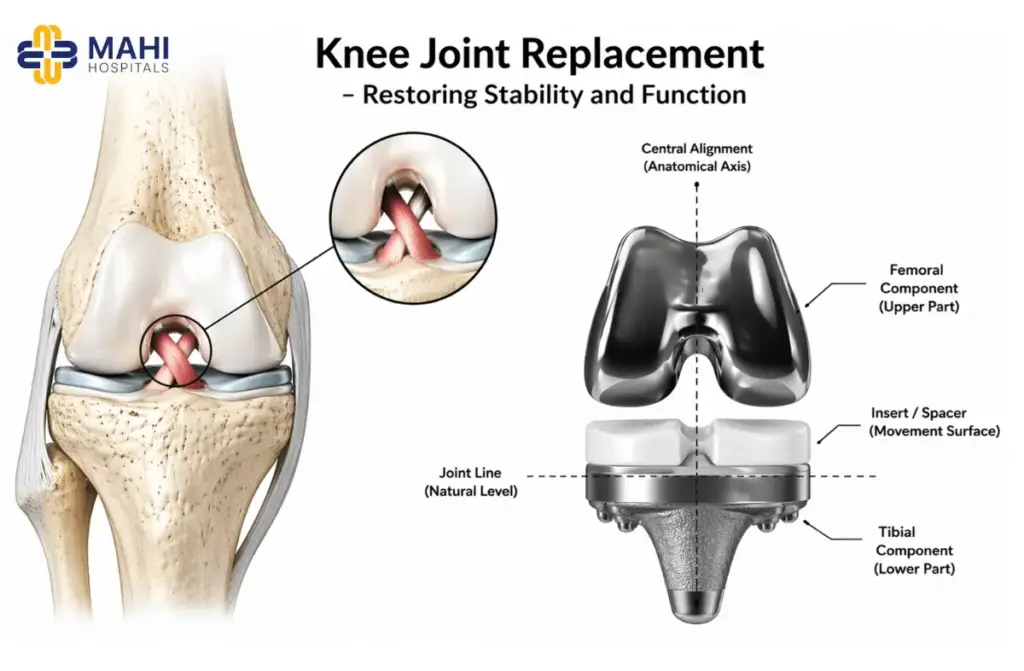
In this procedure, the surgeon removes the damaged bone and cartilage from the end of the thighbone (femur) and the top of the shinbone (tibia), then resurfaces these areas with metal components. A medical-grade plastic spacer is placed between them to create a smooth, gliding surface — mimicking what healthy cartilage does naturally. Depending on your case, the back surface of the kneecap may also be resurfaced.
Recovery takes time and effort, but for most patients with widespread knee damage, total knee replacement offers the most durable and comprehensive pain relief.
Partial Knee Replacement
If the damage in your knee is limited to just one section — usually the inner (medial) compartment — a partial knee replacement may be a more suitable option. This is sometimes called a unicompartmental knee replacement.
The advantage here is significant: because only the affected portion is replaced, more of your natural bone and tissue is preserved. The incision is smaller, blood loss is lower, the hospital stay is shorter, and many patients feel their “new knee” moves more naturally — closer to how their original joint felt.
However, partial replacement isn’t suitable for everyone. It requires that ligaments be intact and that arthritis hasn’t spread across the entire joint. Our surgeons will assess your imaging and symptoms carefully before recommending this approach.
Revision Knee Replacement
A revision knee replacement is performed when a previous knee replacement has worn out, loosened, or developed complications over time. It’s a more complex procedure than the original surgery — the old implant needs to be carefully removed and the bone around it may need to be rebuilt before a new implant can be placed.
Most primary knee replacements last 15–20 years with proper care and activity management. But in some cases — due to infection, implant loosening, or changes in the bone — revision surgery becomes necessary.
If you’ve had a knee replacement done elsewhere and have been experiencing persistent pain, swelling, or instability, our team at Mahi Hospitals can evaluate whether revision surgery is the right course of action for you.
When to Consider Knee Replacement Surgery
Knee replacement surgery is typically advised when knee pain becomes intense and begins to interfere with everyday activities and overall quality of life. Some key indicators include:
- Persistent pain even during rest
- Difficulty in walking, climbing stairs, or standing
- Swelling and stiffness that do not improve with medication
- Deformity in the knee joint (bowing or misalignment)
- Failure of non-surgical treatments such as physiotherapy and injections
Patients experiencing these symptoms should consult a qualified specialist promptly. Delaying treatment can lead to worsening joint damage and reduced quality of life.
Knee Replacement Procedure
It’s completely natural to feel anxious when you don’t know what to expect. Here’s an honest, step-by-step look at what the knee replacement surgery process looks like — from your first consultation to getting back on your feet.
Preoperative Assessment
Before anything else, you’ll go through a thorough evaluation. This isn’t just a formality — it’s how your surgical team personalises your care.
The assessment typically includes X-rays and sometimes a CT scan to understand the extent of joint damage and plan the surgery. Blood tests, an ECG, and sometimes additional cardiac or pulmonary checks ensure that you’re fit for anaesthesia and surgery. Your surgeon will review your medications (some blood thinners need to be paused), your weight, your overall health, and any previous surgeries or conditions that could affect outcomes.
You’ll also meet your anaesthesiologist, who will explain your anaesthesia options — general anaesthesia puts you to sleep completely, while spinal anaesthesia numbs the lower body while keeping you awake. Many patients are surprised to learn that spinal anaesthesia is actually very commonly preferred for knee replacement, as it tends to have fewer side effects.
This is also the right time to ask every question you have. There are no silly questions when it comes to surgery.
Surgery Day
On the day of surgery, you’ll typically be asked to arrive a few hours before the scheduled procedure. After admission and final preparations, you’ll be taken to the operating theatre.
The surgery itself takes roughly 1 to 2 hours for a standard knee replacement. Once the anaesthesia takes effect, the surgeon makes an incision over the knee, moves the kneecap aside, and begins removing the damaged bone and cartilage surfaces. The implant components are then positioned and fixed — using either bone cement or a cementless press-fit technique, depending on your bone quality and the implant type chosen.
Once the implant is in place and the surgeon confirms proper alignment and stability, the incision is closed in layers, a drain may be placed to collect fluid, and you’ll be taken to the recovery room. Most patients are moved to their room within a couple of hours.
Recovery Timeline
Recovery from knee replacement is a gradual process — but it moves faster than most people expect.
Day 1–2: You’ll start sitting up and may even take your first steps with the help of a physiotherapist, often using a walker. This early movement is intentional and important — it prevents blood clots and starts the healing process.
Week 1–2: Most patients are discharged home within 3 to 5 days. You’ll be managing pain with prescribed medications and continuing daily physiotherapy exercises.
Week 4–6: Walking without a walker becomes more comfortable. Many patients are moving around the house independently and handling basic daily tasks.
3 Months: Most people are back to driving, light work, and gentle activities like walking outside.
6–12 Months: Full recovery — including the ability to climb stairs naturally, walk longer distances, and return to leisure activities — typically occurs within this window.
Everyone recovers at their own pace. Factors like age, pre-surgery fitness, body weight, and commitment to physiotherapy all play a role.
Physiotherapy
If there’s one thing that separates a good recovery from a great one, it’s physiotherapy. Surgery restores the mechanical structure of your knee — but it’s physiotherapy that teaches your muscles, tendons, and nervous system how to use it properly again.
Your physiotherapy program at Mahi Hospitals begins before you even leave the hospital. Early exercises focus on reducing swelling, improving circulation, and gently bending the knee. As weeks pass, the program progresses — strengthening the quadriceps and hamstrings, improving balance, and building the endurance needed for normal daily life.
Many patients feel frustrated during the early weeks because progress can feel slow. What’s important to understand is that the healing happening inside your knee takes time that doesn’t always match how you feel on any given day. Trusting the process and staying consistent with your exercises makes a real difference in your final outcome.
Risks and Complications
Being honest about risk is part of responsible medical care. Knee replacement is a safe and well-established procedure, but like any major surgery, it carries a set of risks that every patient deserves to know about before making a decision.
- Blood clots (Deep Vein Thrombosis): Clots can form in the leg veins after surgery. This risk is managed through blood thinners, compression stockings, and early mobilisation — which is why getting out of bed quickly matters.
- Infection: Surgical site infections can occur, though they’re uncommon. In rare cases, a deep infection involving the implant may require additional treatment. Sterile surgical environments, pre-operative antibiotics, and careful wound care minimise this risk significantly.
- Implant loosening or wear: Over many years, the components can loosen or the plastic spacer can wear. This is one reason why very young, highly active patients are counselled carefully about expected implant lifespan.
- Stiffness: Some patients develop scar tissue that limits knee bending. Regular physiotherapy, and in some cases a procedure called manipulation under anaesthesia, can address this.
- Nerve or blood vessel injury: Rare, but possible. Experienced surgeons working in equipped facilities reduce this risk substantially.
- Persistent pain: A small percentage of patients continue to have some knee discomfort even after a technically successful surgery. Understanding what’s causing this and managing it appropriately is part of ongoing care.
Your surgeon will walk you through your individual risk profile before surgery. Asking questions at this stage is not just encouraged — it’s important.
Common Signs That Indicate Knee Replacement
Knee pain can gradually affect mobility, independence, and overall quality of life. Many people ignore the early symptoms of knee joint damage, assuming the discomfort will improve over time. However, persistent pain and stiffness may indicate advanced arthritis or severe joint degeneration that requires proper orthopaedic evaluation. Consulting the best knee replacement surgeon in Kilpauk at the right stage can help patients understand their condition and explore suitable treatment options before symptoms become severe.
- Persistent Pain While Walking or Standing: One of the most common warning signs is ongoing knee pain during walking, standing, or daily movement. Patients may experience discomfort even after short periods of activity, making routine tasks physically exhausting. Continuous knee pain can indicate cartilage damage or joint wear that affects normal knee function.
- Trouble Climbing Steps or Stairs: Difficulty climbing stairs is another common symptom associated with knee arthritis and joint degeneration. Many patients notice weakness, pain, or instability while using stairs, especially when putting pressure on the knee joint. Early assessment by a knee specialist in Purasawalkam may help identify the cause and prevent worsening mobility issues.
- Morning or Post-Rest Knee Stiffness: Knee stiffness after waking up or sitting for long periods can make movement uncomfortable. This stiffness often improves slightly with activity but may return later in the day. Persistent stiffness is commonly associated with osteoarthritis and joint inflammation.
- Ongoing Knee Swelling and Inflammation: Frequent swelling around the knee joint may occur due to inflammation, cartilage damage, or fluid accumulation. Swelling that does not improve with rest, medication, or physiotherapy may require advanced orthopaedic evaluation.
- Night Pain and Sleep Disturbance: Severe knee pain can affect sleep quality and overall well-being. Some patients experience discomfort even while resting, which may indicate advanced joint degeneration requiring specialized treatment.
- Difficulty Managing Everyday Activities: Simple activities such as walking, sitting, standing, or getting out of a chair may become increasingly difficult due to knee pain and reduced joint movement. Many patients begin avoiding physical activities because of discomfort and fear of worsening pain.
- Why Early Orthopaedic Evaluation Matters: Early consultation with the best knee doctor in Egmore can help identify knee problems before they progress further. Proper diagnosis, imaging, and treatment planning may reduce pain, improve mobility, and delay the need for surgery in certain cases.
Advantages and Possible Risks of Knee Replacement
For anyone living with severe arthritis or chronic knee pain, reaching the point where surgery is on the table usually means you’ve already tried everything else. Knee replacement isn’t a decision people make lightly — and it shouldn’t be. The best thing you can do before moving forward is understand, clearly and honestly, what the surgery can offer and what it cannot guarantee.
When patients consult a knee replacement doctor in Chetpet, one of the first things discussed is exactly this — not just the benefits, but the realistic picture of what to expect on both sides of the equation. That kind of transparency is what allows patients to walk into surgery with confidence rather than anxiety.
- Key Benefits of Knee Replacement Surgery:The primary goal of knee replacement surgery is to relieve pain, restore mobility, and improve overall quality of life. Many patients experience better movement and greater confidence in performing everyday activities after recovery.
- Restoring Comfortable Movement and Walking: After successful surgery and rehabilitation, many patients can walk more comfortably and participate in daily routines with reduced pain and stiffness.
- Improved Joint Strength and Stability: Artificial knee implants help restore stability and balance, making movements safer and more comfortable for patients affected by severe joint damage.
- Enhancing Daily Comfort and Independence: Simple activities such as standing, climbing stairs, shopping, and walking outdoors often become easier after knee replacement surgery. Improved mobility may also support emotional well-being and confidence.
- Understanding the Possible Surgical Risks: Like any major surgical procedure, knee replacement surgery carries certain risks that patients should understand before treatment.
- Managing Infection and Blood Clot Risks: Potential complications may include infection, blood clots, or delayed wound healing. These risks are carefully managed through surgical protocols, medications, monitoring, and follow-up care.
- Temporary Swelling and Recovery Challenges: Some patients may experience temporary swelling, stiffness, or discomfort during recovery. Physiotherapy and rehabilitation play an important role in improving movement and reducing post-operative stiffness.
- Importance of Follow-Up and Rehabilitation Care: Regular follow-up consultations help monitor healing, implant function, and recovery progress. Rehabilitation programs are designed to strengthen the knee joint and improve flexibility over time.
Success Rate of Knee Replacement Surgery
Knee replacement is one of the most studied and well-documented surgical procedures in orthopaedics — and the outcomes data is genuinely reassuring.
Nationally and globally, knee replacement surgery carries a success rate of over 90%, with most patients reporting significant pain reduction and improved mobility. Studies consistently show that around 85% of implants are still functioning well at the 20-year mark when patients follow activity guidelines and maintain a healthy weight.
Patient satisfaction is high — particularly in those who had realistic expectations going in and committed to their physiotherapy program. Most describe the change as transformational: being able to sleep through the night, walk without a limp, climb stairs again, or simply sit comfortably through a meal.
At MAHI Hospitals, our outcomes are tracked continuously. We believe that transparency about results is part of good care — and that the best way to earn a patient’s trust is by being honest about what surgery can and cannot achieve. A successful knee replacement doesn’t mean your knee will feel exactly like it did when you were 25. It means you’ll be able to live your life without being defined by pain.
Expert orthopedic care is just a call away. Book your appointment today.
Robotic Knee Replacement vs Traditional Surgery
This is one of the questions we hear most often from patients — and it’s a fair one to ask.
Traditional knee replacement surgery relies on the surgeon’s skill, handheld instruments, and pre-operative measurements to guide cutting and implant placement. Experienced surgeons do this extremely well, and traditional surgery has a long, proven track record.
Robotic-assisted knee replacement doesn’t replace the surgeon — that’s an important distinction. What it does is give the best knee replacement surgeon in Purasaiwakkam a level of intraoperative precision and real-time feedback that traditional instruments alone cannot consistently provide.
Here’s what that means practically:
- More accurate implant positioning: Even small errors in alignment — a few degrees off — can affect how the implant wears over time and how natural the knee feels. The robotic system helps the surgeon hit precise targets every time.
- Less bone removal: Because the cutting is guided to the millimeter, only the bone that needs to come out is removed. This matters for long-term bone health and for future revision surgery, if it ever becomes necessary.
- Faster recovery for many patients: With less soft tissue disruption and more accurate placement, many patients experience less post-operative pain and get back on their feet more quickly.
- Consistent outcomes: The robotic system allows reproducibility — the same high level of precision regardless of variables that can affect traditional surgery.
That said, robotic surgery isn’t automatically the right choice for every patient. Your anatomy, the type of replacement needed, and the overall clinical picture all factor into the decision. Our surgeons will discuss both approaches openly with you, including the pros and cons, so you can make a genuinely informed choice.
Cost of Knee Replacement Surgery in Chennai
Cost is a legitimate concern — and it’s one patients often feel awkward raising. You shouldn’t. Understanding what you’ll spend is a necessary part of making an informed decision.
The cost of knee replacement surgery in Chennai varies depending on several factors: the type of replacement (total, partial, or revision), whether it’s a single knee or bilateral (both knees), the implant brand and grade, the surgical technique used (conventional or robotic-assisted), the duration of hospital stay, and any additional tests or therapies required.
At Mahi Hospitals, we provide a clear cost breakdown before surgery — no hidden charges, no surprises when the bill arrives. Our team will also help you understand what your health insurance covers, assist with pre-authorisation where applicable, and explain payment options if needed.
Robotic-assisted surgery may cost more, but for many patients the precision benefits and potential for a better long-term outcome make it a worthwhile consideration.
We’d rather you have an honest conversation about cost upfront than feel uncertain about finances when you should be focused on healing.
Patient Testimonials
I underwent knee replacement surgery last year under Dr. Vijay Kumar Sohanlal, and my experience was excellent. From the initial consultation to post-surgery follow-ups, he was very professional, patient, and reassuring. The surgery went smoothly, and the recovery process was well guided with proper care and support.
Before the surgery, I had severe knee pain and difficulty walking, but now I can move comfortably and perform my daily activities with much less pain. Dr. Vijay Kumar Sohanlal explained every step clearly and made me feel confident throughout the treatment.
I sincerely thank him and his team for their dedication, expertise, and compassionate care. I would highly recommend Dr. Vijay Kumar Sohanlal to anyone considering knee replacement surgery.
I just wanted to say thanks for the incredible care, patience, and approach you showed by mahi hospital and the doctor with my father. The way dr.vijay sohanlal handled the entire CFRA Procedure without general anesthesia — calming him, explaining each step, and keeping him at ease — was amazing.
My father struggles with anxiety, yet you managed everything without letting his BP fluctuate. You gave him comfort and confidence when he needed .wishing good luck for hospital…..as the hospitality higene,supporting doctors.. management.. everything was an great experience.
I truly recommend this hospital and the doctor because of its higine and dedication shown by the whole team in the hospital.
We’re truly grateful for your compassion and skill. Thank you so much.
Conclusion
Knee pain should never be ignored, especially when it begins to interfere with your daily life. With advancements in orthopaedic care, effective treatment options are now more accessible than ever. From early diagnosis to advanced surgical solutions like robotic knee replacement, patients can achieve lasting relief and improved mobility.
Choosing an experienced and skilled surgeon plays a crucial role in ensuring successful outcomes. With his extensive expertise, global training, and commitment to patient-first care, Dr. Vijay Kumar Sohanlal continues to be a trusted name in knee replacement surgery in Chennai. If you are experiencing chronic knee pain or limited mobility, seeking timely consultation can help you regain an active and pain-free life.
Read More: Hemiarthroplasty : Procedure, Recovery, and More.