Hemiarthroplasty is a specialized orthopedic surgical procedure designed to treat severe hip joint damage by replacing only the femoral head while preserving the natural socket. It is commonly recommended for patients suffering from hip fractures, degenerative joint conditions, and reduced hip function that cannot be managed with non-surgical treatments. This procedure plays a crucial role in restoring mobility, reducing chronic pain, and improving overall quality of life, especially in elderly individuals. With advancements in surgical techniques and implant technology, hemiarthroplasty has become a safe and effective option that supports faster recovery and long-term functional improvement.
What is Hemiarthroplasty?
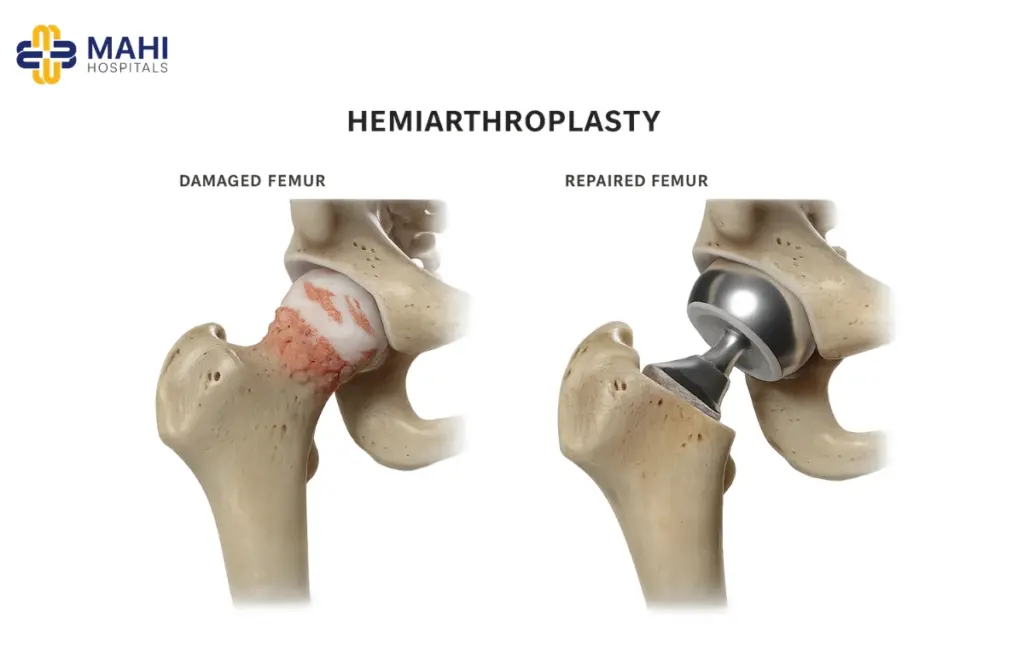
- Hemiarthroplasty refers to a partial hip joint replacement procedure in which only the damaged femoral head is replaced with an artificial implant. The hip joint consists of the femoral head and the acetabulum (hip socket). In this surgery, the socket is preserved if it remains healthy, making the procedure less invasive compared to complete joint replacement.
- This method is widely used when damage is limited to one part of the hip joint. The main aim of Hemiarthroplasty is to restore smooth movement, reduce pain, and improve stability while preserving as much natural bone as possible.
Causes Leading to Hemiarthroplasty
- Several medical conditions may require this procedure. One of the most common is hip fracture caused by falls or trauma. Another major cause is bone degeneration due to reduced blood supply or chronic joint diseases.
- Hip Fracture Surgery is often required when the femoral neck breaks and blood circulation to the bone is disrupted. In such cases, natural healing becomes difficult, making surgical intervention necessary.
- Degenerative conditions also play a role, where joint surfaces gradually wear out over time. In these cases, Hemiarthroplasty provides effective pain relief and functional restoration.
Types of Hemiarthroplasty
- Unipolar Type: In this type, a single prosthetic head is used that directly moves against the natural socket. It is commonly used in elderly patients with lower activity levels. This form of Partial Hip Replacement is simpler and quicker to perform.
- Bipolar Type: This advanced design includes an internal joint within the implant, allowing movement between two surfaces. It reduces stress on the natural socket and provides smoother mobility. It is often preferred in active patients undergoing Partial Hip Replacement procedures.
Both types aim to improve movement and reduce discomfort while maintaining joint stability.
Surgical Procedure Overview
- The surgery begins with a detailed medical evaluation including imaging tests and physical assessment. Once the patient is deemed fit, anesthesia is administered for a painless procedure.
- A surgical incision is made near the hip to access the joint. The damaged femoral head is carefully removed, and a metal stem with an artificial head is inserted into the femur. This implant restores the joint structure and function.
- In many cases, Hip Replacement Surgery principles are applied in terms of precision alignment and implant fixation to ensure long-term success.
- After placement, the incision is closed, and the patient is moved to recovery for observation.
Benefits of Hemiarthroplasty
Hemiarthroplasty offers multiple advantages, especially for patients needing quick functional recovery.
- Effective pain relief: Hemiarthroplasty significantly reduces severe hip pain caused by fractures, degeneration, or joint damage. By replacing the damaged femoral head, the source of discomfort is removed, allowing patients to experience long-lasting relief and improved comfort in daily movement.
- Improved hip movement: This procedure restores smooth and stable hip joint motion. Patients often regain the ability to walk, sit, and perform basic activities with greater ease. Improved joint function helps enhance balance and reduces stiffness over time.
- Shorter surgical duration: Compared to total hip replacement, hemiarthroplasty usually takes less time in the operating room. This reduces anesthesia exposure and overall surgical stress, making it a suitable option for elderly or medically sensitive patients.
- Faster recovery compared to full replacement: Since only one part of the joint is replaced, healing is generally quicker. Patients are often encouraged to start walking with support within a short period, which supports faster rehabilitation and early return to daily activities.
- Preservation of healthy bone: One of the key advantages of hemiarthroplasty is that it preserves the natural hip socket. Only the damaged femoral head is replaced, allowing the remaining healthy bone structure to stay intact, which supports natural joint balance.
- Better independence in daily life: After recovery, patients often regain independence in performing routine tasks such as walking, dressing, and light household activities. This improvement greatly enhances overall quality of life and reduces dependency on caregivers.
In many clinical cases, Hip Replacement Surgery techniques inspire improved implant design and outcomes even in partial replacements.
Recovery Process
Recovery after Hemiarthroplasty is structured and progressive.
- Early Recovery Phase: Patients are encouraged to begin gentle movement within 24–48 hours after surgery. This early mobilization is an important step in the healing journey, as it helps improve blood circulation, prevents stiffness in the joint, and reduces the risk of complications such as blood clots. Under medical supervision, patients may start sitting on the bed, standing with support, and taking a few assisted steps. Pain management is carefully monitored during this stage to ensure comfort while allowing safe movement. Early activity also supports faster adaptation of the new joint and builds confidence in mobility.
- Physiotherapy Stage: Rehabilitation plays a key role in restoring strength and flexibility after Hemiarthroplasty. A structured physiotherapy program is designed based on the patient’s age, physical condition, and recovery progress. Initially, exercises focus on gentle range-of-motion movements to prevent stiffness. Gradually, strengthening exercises are introduced to improve muscle support around the hip joint. Balance training and gait correction exercises help restore normal walking patterns. Consistent physiotherapy sessions, along with home-based practice, significantly enhance recovery speed and long-term joint function. This stage is essential for achieving stable and pain-free movement.
- Home Recovery: At home, patients must follow strict precautions to ensure proper healing and avoid complications. Using walking aids such as walkers or canes is recommended until stability improves. Sudden movements, twisting of the hip, and deep bending should be avoided. Maintaining correct posture while sitting, standing, and sleeping helps reduce stress on the operated joint. Following prescribed medications, keeping the surgical site clean, and attending regular follow-up visits are equally important. A balanced diet and proper hydration also support tissue healing and overall recovery.
Hip Fracture Surgery patients especially benefit from disciplined rehabilitation routines to regain full mobility.
Risks and Complications
While Hemiarthroplasty is generally safe, certain risks may occur:
- Infection: Infection is one of the possible complications after Hemiarthroplasty, occurring either at the incision site or deeper around the implant. It may cause redness, swelling, pain, or fever. Strict sterile surgical techniques, antibiotics, and proper wound care significantly reduce this risk. Early detection and timely medical treatment help prevent serious outcomes.
- Blood clot formation: Blood clots, especially in the legs (deep vein thrombosis), can develop after surgery due to reduced mobility. These clots may cause pain, swelling, or discomfort in the calf area. Preventive measures such as early walking, leg exercises, compression stockings, and blood-thinning medications are commonly used to minimize this risk.
- Implant dislocation: Implant dislocation occurs when the artificial joint moves out of its normal position. This can happen due to sudden movements, improper posture, or accidental falls. Following movement restrictions and physiotherapy guidelines is essential to maintain joint stability and prevent dislocation.
- Loosening of prosthesis: Over time, the implanted component may loosen due to wear, stress, or bone changes around the implant. This may lead to pain or reduced joint function. Regular follow-ups and imaging tests help monitor implant stability and detect early signs of loosening.
- Nerve irritation (rare): In rare cases, nearby nerves may become irritated or injured during surgery, leading to temporary numbness, tingling, or weakness. Most nerve-related issues improve gradually with time and proper medical care.
With proper surgical care and follow-up, these risks remain low.
Lifestyle After Surgery
- After undergoing Hemiarthroplasty, lifestyle adjustments are essential for long-term success.
- Patients are encouraged to follow a healthy routine that includes low-impact exercises such as walking and swimming. This supports joint strength and flexibility without stressing the implant.
- A balanced diet rich in nutrients supports healing and bone health. Maintaining a healthy body weight reduces pressure on the hip joint and improves implant longevity.
- In some cases, patients who previously required Partial Hip Replacement procedures experience significant improvements in mobility and independence.
Long-Term Outcomes
- The success rate of Hemiarthroplasty is generally high when performed in appropriate patients. Most individuals experience steady pain relief, improved hip stability, and better walking ability after recovery. This helps them return to daily activities with greater independence and comfort. Quality of life improves significantly when rehabilitation is followed properly.
- Long-term results depend on age, health condition, activity level, and adherence to physiotherapy. Patients who maintain regular exercises and follow medical advice achieve more stable and lasting outcomes. Keeping a healthy body weight also reduces stress on the implant and supports long-term joint function.
- Advances in Hip Replacement Surgery techniques have improved implant design, precision, and durability, which positively impacts hemiarthroplasty outcomes as well.
- With proper care, follow-ups, and lifestyle management, most patients enjoy long-lasting mobility and good functional results.
Prevention and Care Tips
- Although not all hip conditions can be prevented, certain steps can reduce risk:
- Prevent falls by maintaining safe home environments: Keeping living spaces free from obstacles, using proper lighting, and installing support aids like handrails can greatly reduce the chance of slips and injuries, especially in elderly individuals.
- Strengthen bones through nutrition and exercise: A diet rich in calcium, vitamin D, and protein, along with regular weight-bearing exercises, helps improve bone strength and joint stability, lowering the risk of fractures.
- Treat osteoporosis early: Early diagnosis and management of osteoporosis help maintain bone density and reduce the chances of sudden hip injuries or fractures.
- Regular health check-ups: Routine medical evaluations allow early detection of bone weakness or joint issues, ensuring timely treatment and better prevention of complications.
- These practices reduce the likelihood of requiring Hip Fracture Surgery or similar interventions.
Conclusion
Hemiarthroplasty is a highly effective orthopedic procedure designed to restore hip function by replacing only the damaged portion of the joint. It provides pain relief, improved mobility, and faster recovery compared to more extensive surgeries. With advancements in medical science, Hemiarthroplasty continues to deliver excellent outcomes for patients suffering from hip fractures and degenerative conditions. Proper rehabilitation, lifestyle modifications, and regular follow-up care ensure long-term success and improved quality of life.
Read More: Soft Tissue Injuries.