

Medically Reviewed by: Dr. Vijay Kumar Sohanlal, MBBS, MS (Orthopaedics), Orthopaedic and Joint Replacement Surgeon, Chennai.
Tamil Nadu Medical Council Registration No. 70250.
Last medically reviewed: November 2026
Have you experienced joint pain, swelling or stiffness after recovering from a viral fever? You might expect your body to return to normal once the fever, cold or other infection settles. However, some people continue to experience discomfort in their knees, wrists, fingers, ankles or other joints even after their initial illness has improved. This can become concerning, particularly when everyday activities such as walking, climbing stairs, holding objects or getting out of bed become uncomfortable.
One possible explanation is post viral arthritis, a condition associated with joint inflammation or joint-related symptoms following a viral infection. Certain viruses can trigger an inflammatory response that affects the joints. In some people, the symptoms settle as the infection resolves, while others may experience discomfort for a longer period and need further medical evaluation.
Not every episode of joint pain after a fever is caused by post-viral arthritis. Conditions such as rheumatoid arthritis, reactive arthritis, gout and other inflammatory or infectious joint disorders can produce similar symptoms. Understanding the possible causes, recognising the warning signs and receiving an appropriate medical assessment can help guide treatment.
In this article, we explain the viral causes of arthritis, common symptoms, diagnostic methods, treatment options and recovery expectations in simple language.
What is Post Viral Arthritis?
Post viral arthritis refers to joint inflammation or joint symptoms that develop during or following a viral illness. It may involve pain, swelling, tenderness and stiffness in one or multiple joints. The condition is associated with the body’s immune response to a viral infection, although the exact mechanism can vary depending on the virus involved.
When a virus enters the body, the immune system responds by identifying and fighting the infection. During this process, inflammatory substances are released to help control the virus. In certain infections, this immune response can also affect tissues around the joints, including the synovium, which is the thin lining responsible for producing joint fluid. Inflammation in this area can contribute to swelling, stiffness and discomfort.
The term post viral arthritis is sometimes used broadly, but doctors distinguish between arthritis occurring during an active viral infection and joint symptoms that continue after the infection has improved. Viral arthritis is generally acute and may resolve within a few weeks, although certain infections, particularly chikungunya, can be associated with longer-lasting joint symptoms.
Not everyone who develops a viral infection experiences joint inflammation. The likelihood and duration of symptoms depend on the infection, the individual’s immune response and other health-related factors.
How Does a Viral Infection Affect the Joints?
There are different ways in which viral infections may contribute to joint inflammation. In some cases, the immune system produces antibodies that form immune complexes. These complexes can contribute to inflammation in different body tissues, including the joints. In other situations, the virus may interact directly with joint tissues or trigger inflammatory pathways that continue for some time.
For example, parvovirus B19 can produce joint symptoms that resemble early rheumatoid arthritis, particularly in adults. Chikungunya can cause significant joint pain and stiffness, sometimes continuing after the initial fever and other symptoms have disappeared.
This does not mean that every viral infection will affect your joints. Many people recover from viral illnesses without developing arthritis. The type of infection and the individual’s inflammatory response can influence the presentation.
What are the Viral Causes of Arthritis?
Several viruses are associated with joint pain and inflammation. Some produce temporary symptoms, while others may be associated with persistent or recurrent joint problems.
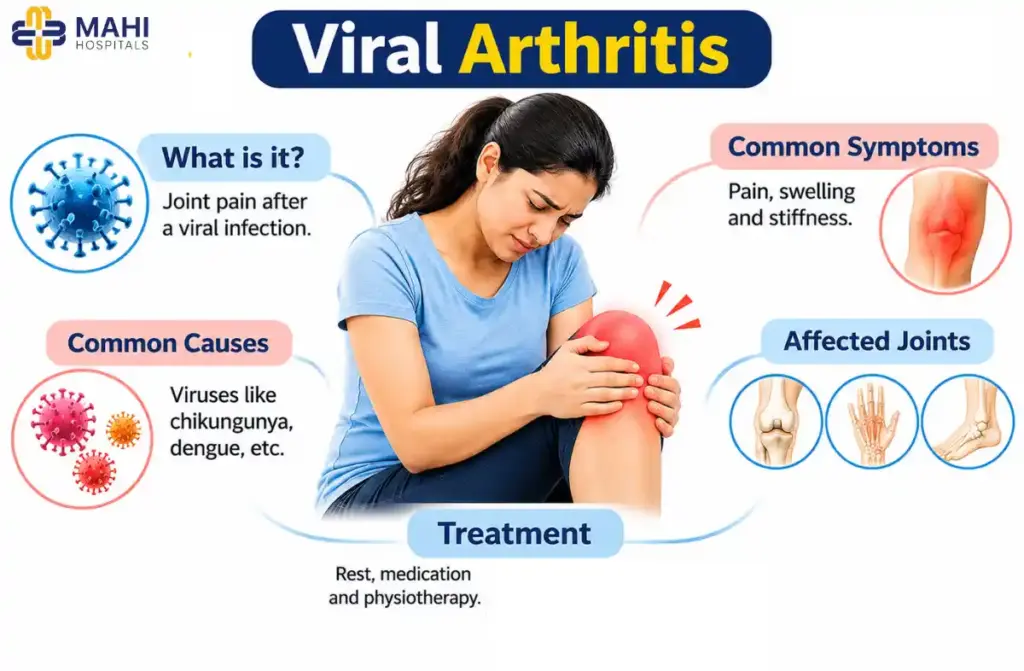
Understanding the viral arthritis causes is useful because the symptoms and treatment approach can differ depending on the infection.
Common Viruses Associated With Joint Inflammation
The following viruses are recognised causes of viral arthritis or virus-associated joint symptoms.
| Virus | Possible joint-related symptoms |
| Chikungunya virus | Severe joint pain, swelling and prolonged stiffness |
| Parvovirus B19 | Symmetrical pain and swelling, particularly in small joints |
| Dengue virus | Muscle pain and joint discomfort during infection |
| Hepatitis B virus | Joint pain and inflammatory symptoms, sometimes with skin rash |
| Hepatitis C virus | Joint pain and inflammatory joint conditions |
| Epstein-Barr virus | Joint discomfort associated with systemic infection |
| Rubella virus | Joint pain and stiffness |
| Zika virus | Joint pain, sometimes with rash and fever |
| HIV | Different patterns of joint pain and inflammatory arthritis |
| COVID-19-associated infection | Joint pain and musculoskeletal symptoms in some individuals |
These infections do not affect everyone in the same way. The presence of one of these viruses does not automatically mean that a person will develop arthritis.
Chikungunya: Chikungunya is an important consideration in tropical regions, including India. It is transmitted through infected mosquitoes and commonly causes fever, muscle pain and significant joint pain. Some individuals experience joint stiffness and discomfort that continue well after the acute illness. Persistent symptoms may require assessment to determine whether ongoing inflammation or another condition is present.
Parvovirus B19: This virus is associated with a condition called erythema infectiosum in children. Adults may experience joint pain and swelling, particularly in the hands, wrists and knees. In some cases, the symptoms resemble rheumatoid arthritis.
Hepatitis B and C: These viral infections can be associated with joint symptoms. Sometimes, joint inflammation develops as part of the immune response to the infection. Appropriate evaluation is important because the underlying viral illness may also require medical management.
Dengue and other mosquito-borne infections: Dengue can produce considerable muscle and joint discomfort. However, joint pain during dengue should not automatically be classified as arthritis. A doctor needs to assess the symptoms and distinguish generalised body pain from actual joint inflammation.
Why Does Joint Pain Continue After a Viral Fever?
One common concern among patients is why joint pain remains even when the fever has disappeared. The reason is that the immune response and the recovery of affected tissues do not always follow the same timeline as the fever.
During an infection, the immune system activates inflammatory processes to control the virus. In some individuals, these processes may continue to affect the joints after the initial infection improves. This can cause lingering stiffness, tenderness or swelling.
The duration varies. Some people recover within days or weeks, while others experience symptoms for several months, depending on the infection and individual circumstances.
Persistent joint pain should not automatically be considered a normal part of recovery. If discomfort continues, worsens or affects daily activities, a medical assessment can help identify the underlying reason.
What are the Symptoms of Post Viral Arthritis?
The symptoms of post viral arthritis can differ from person to person. Some individuals experience mild discomfort, while others develop noticeable swelling and difficulty moving the affected joints.
Common symptoms include:
- Joint pain: Aching or discomfort in one or more joints, particularly during movement.
- Joint swelling: Visible swelling around the affected joint due to inflammation.
- Morning stiffness: Difficulty moving the joints after waking up or remaining inactive.
- Joint tenderness: Pain when pressure is applied to the affected area.
- Reduced mobility: Difficulty bending the knees, moving the wrists or performing everyday activities.
- Fatigue: A feeling of tiredness that may continue after the original infection.
- Muscle aches: Discomfort in the muscles surrounding affected joints.
- Low-grade fever: Some individuals may experience fever as part of an ongoing or separate illness.
Certain people also experience redness and warmth around inflamed joints. The pattern may involve several joints, and symptoms can sometimes affect both sides of the body.
For instance, someone recovering from a viral fever may notice stiffness in both wrists and fingers. Another person may experience swelling and discomfort in the ankles or knees. The type of virus and the individual’s inflammatory response can influence the presentation.
It is important to distinguish joint pain from joint inflammation. Pain alone does not necessarily mean arthritis. A clinical examination helps determine whether there is actual swelling, tenderness, restricted movement or other evidence of inflammation.
If a joint becomes suddenly very painful, hot and swollen, particularly with fever, seek urgent medical assessment to rule out septic arthritis. This is a potentially serious joint infection and should not be mistaken for ordinary post-viral discomfort.
Which Joints are Commonly Affected?
Post-viral joint symptoms can involve different parts of the body. The location and number of affected joints may depend on the virus responsible.
Knee joints: The knees may become painful or stiff, making activities such as walking, climbing stairs, squatting and standing up uncomfortable. Some people notice swelling around the knee joint.
Wrist and finger joints: Pain in the wrists and small joints of the fingers can affect gripping, writing, cooking and handling everyday objects. This pattern may occur in parvovirus-associated arthritis.
Ankle joints: Ankle discomfort can make walking or standing for extended periods difficult. Swelling may also affect normal movement.
Shoulder joints: Some individuals experience shoulder pain and restricted movement, particularly when lifting their arms or reaching overhead.
Hip joints: Hip-related discomfort may be felt around the groin, outer hip or upper thigh. A doctor may need to assess whether the symptoms are originating from the hip joint or surrounding muscles.
Joint symptoms can affect one joint or multiple joints. In many viral arthritis presentations, several joints are involved, sometimes in a symmetrical pattern. However, the pattern alone cannot confirm the diagnosis.
Who is at Risk of Developing Post Viral Arthritis?
Not everyone who experiences a viral infection develops joint inflammation. However, certain infections are more commonly associated with arthritis-related symptoms.
People who have had infections such as chikungunya, parvovirus B19, hepatitis B or hepatitis C may develop joint symptoms. The geographical distribution of certain mosquito-borne infections also influences which viral causes doctors consider during an assessment.
Age, existing health conditions, immune function and the nature of the infection may influence how a person experiences joint symptoms. People with an existing inflammatory joint disorder may also find it difficult to distinguish a new infection-related episode from their underlying condition.
A history of recent fever, skin rash, travel, mosquito exposure, contact with an infected person and previous medical conditions can help the doctor understand the possible cause.
However, there is no single risk factor that reliably predicts who will develop post-viral arthritis. A detailed clinical assessment is more useful than assuming that joint pain following a fever has one particular cause.
Is Rheumatoid Arthritis Viral or Bacterial?
Rheumatoid arthritis is neither a viral infection nor a bacterial infection. It is a chronic autoimmune disease in which the immune system mistakenly attacks the body’s own joint tissues.
This distinction is important because viral arthritis and rheumatoid arthritis can sometimes produce similar symptoms.
In rheumatoid arthritis, the immune system causes persistent inflammation in the joint lining. Over time, uncontrolled inflammation can damage cartilage, bones and other structures within the joints.
Viral arthritis, on the other hand, is associated with a viral infection or the body’s immune response to that infection. It is commonly temporary, although some viral infections can cause prolonged or recurrent joint symptoms.
Another important point is that certain viral infections can temporarily produce positive rheumatoid factor or antinuclear antibody results. These findings do not automatically confirm rheumatoid arthritis.
Doctors may consider several factors before making a diagnosis, including:
- How quickly the joint symptoms started.
- Whether there was a recent viral illness.
- Which joints are affected.
- Whether morning stiffness is persistent.
- Whether there is visible joint swelling.
- Results of relevant blood tests.
- Whether symptoms improve or continue over time.
Rheumatoid arthritis is not diagnosed through one blood test alone. Clinical findings, symptom duration and investigations are considered together.
If joint pain and stiffness continue, particularly in the small joints of the hands and feet, evaluation by a rheumatologist may be appropriate.
Post Viral Arthritis vs Rheumatoid Arthritis vs Reactive Arthritis
These three conditions can produce joint pain and inflammation, but their underlying causes and clinical patterns are different.
| Feature | Post-viral arthritis | Rheumatoid arthritis | Reactive arthritis |
| Main association | Recent or current viral infection | Autoimmune disease | Immune response following certain bacterial infections |
| Onset | During or after viral illness | Often gradual, sometimes sudden | Usually after an infection |
| Joint pattern | May involve multiple joints | Commonly symmetrical small-joint involvement | Often asymmetrical, particularly in lower limbs |
| Duration | Often temporary, but varies | Usually chronic without appropriate disease management | Variable |
| Common symptoms | Pain, swelling and stiffness | Persistent swelling, stiffness and tenderness | Joint pain, swelling and sometimes tendon or eye symptoms |
| Treatment | Depends on the virus and symptoms | Disease-modifying treatment may be needed | Depends on symptoms and the underlying infection |
Reactive arthritis deserves particular attention. It is an inflammatory joint condition that can develop after certain bacterial infections, including gastrointestinal or genitourinary infections. It is not the same as viral arthritis, although the two may produce overlapping symptoms.
The purpose of this comparison is not to help patients diagnose themselves. A doctor must evaluate the history, examination findings and appropriate investigations before identifying the condition.
How is Post Viral Arthritis Diagnosed?
Diagnosing post viral arthritis involves understanding the patient’s recent medical history, identifying the pattern of joint symptoms and ruling out other possible causes of inflammation.
There is no single test that confirms every case of post viral arthritis. A doctor generally considers when the joint symptoms started, whether the patient recently experienced fever or another viral illness, which joints are affected and whether there are other symptoms such as fatigue, skin rash or muscle pain.
During the consultation, the doctor may ask questions about the duration of symptoms, previous infections, medications, existing medical conditions and any recent travel or mosquito exposure. A physical examination helps identify swelling, tenderness, warmth and restrictions in joint movement.
Investigations are selected according to the clinical findings. Not everyone requires every available test. The main purpose of diagnosis is to identify the likely cause of joint inflammation and exclude conditions that require different or urgent treatment.
Medical Examination and Blood Tests
Depending on the symptoms, the doctor may recommend the following investigations.
1. Complete Blood Count (CBC)
A CBC measures different types of blood cells, including red blood cells, white blood cells and platelets. It can provide useful information when evaluating a recent infection or other medical conditions. However, a CBC alone cannot confirm post viral arthritis.
2. ESR (Erythrocyte Sedimentation Rate)
ESR is a blood test used to assess inflammation in the body. An elevated result may indicate an inflammatory process, but it does not identify the exact cause.
3. CRP (C-Reactive Protein)
CRP is another marker of inflammation. It may increase during infections and inflammatory joint conditions. Doctors may use it alongside other findings to assess the level of inflammation.
4. Viral Serology
When a particular viral infection is suspected, specific antibody tests or other laboratory investigations may be recommended. For example, testing for parvovirus B19, hepatitis viruses or other infections may be appropriate depending on the clinical presentation.
The choice of test depends on the suspected infection and the timing of symptoms. A positive antibody result does not always mean that an infection is currently active.
5. Rheumatoid Factor and Anti-CCP
If rheumatoid arthritis is being considered, the doctor may recommend rheumatoid factor (RF) and anti-cyclic citrullinated peptide (anti-CCP) tests. These tests help assess the possibility of rheumatoid arthritis but must be interpreted alongside symptoms and examination findings.
6. Joint Fluid Analysis
If a joint is significantly swollen, the doctor may recommend removing a small amount of joint fluid using a procedure called joint aspiration or arthrocentesis.
The fluid can be examined for signs of infection, crystals and inflammation. This investigation is particularly important when septic arthritis or crystal-related arthritis is suspected.
7. Imaging Tests
X-rays, ultrasound or MRI may be recommended in selected cases. Ultrasound can help identify joint inflammation and fluid accumulation, while MRI may provide additional information about soft tissues and joint structures.
Not all patients require imaging. The doctor decides whether these investigations are necessary based on the examination and suspected diagnosis.
What are the Treatment Options for Post Viral Arthritis?
Treatment for post viral arthritis depends on the underlying infection, the severity of joint symptoms and the patient’s overall health.
In many cases, treatment focuses on controlling pain and inflammation while the body recovers. However, when a specific viral infection requires treatment, managing that infection is also important.
There is no single medication suitable for everyone with post viral arthritis. The treatment plan should be based on an individual medical assessment rather than the assumption that all joint pain following a fever has the same cause.
Medications and Pain Management
A doctor may consider different medications depending on the patient’s symptoms and medical history.
Pain relievers: Certain pain-relieving medications may help reduce discomfort and improve the ability to perform daily activities. The choice depends on age, existing medical conditions and other medications being taken.
Non-steroidal anti-inflammatory drugs (NSAIDs): Medicines in this category may help reduce joint pain and inflammation. However, they are not suitable for everyone. For example, certain NSAIDs may be unsuitable during dengue infection, particularly when there is a risk of bleeding. Kidney disease, stomach ulcers, cardiovascular conditions and other factors also need consideration.
Treatment of the underlying infection: Some viral infections, including hepatitis B, hepatitis C and HIV, may require specific antiviral treatment. Managing the underlying infection may also improve associated joint symptoms.
Other anti-inflammatory treatments: In selected situations, a specialist may consider additional treatment based on the diagnosis. Corticosteroids or other immune-modifying medicines should not be started without specialist assessment, particularly when an active infection has not been excluded.
Patients should avoid taking leftover medicines or combining painkillers without medical advice. Appropriate treatment depends on the actual cause of the symptoms.
Physiotherapy and Lifestyle Modifications
Along with medical treatment, suitable activity modifications may help improve joint movement and physical function.
Gentle joint movements: Avoid keeping an affected joint completely inactive for prolonged periods unless advised by a doctor. Gentle movements may help reduce stiffness and maintain mobility.
Physiotherapy: A physiotherapist may recommend suitable exercises to improve flexibility, muscle strength and joint movement. The exercise programme should be adjusted according to the level of pain and inflammation.
Adequate rest: Allowing time for recovery is important, especially when fatigue and joint discomfort are present. Avoid activities that significantly increase pain.
Balanced nutrition: Include a balanced diet containing vegetables, fruits, protein sources and other essential nutrients. Adequate nutrition supports general recovery and overall health.
Hydration: Maintain adequate fluid intake, particularly during recovery from fever or other infections. Follow specific medical advice if you have a condition that requires fluid restriction.
Gradual return to activities: Increase walking, household activities and exercise gradually as symptoms improve. Avoid suddenly returning to strenuous workouts or heavy physical activity.
The objective is to maintain comfortable movement without placing unnecessary stress on inflamed joints.
How Long Does Post Viral Arthritis Last?
The recovery period varies depending on the virus responsible, the severity of inflammation and the individual’s overall health.
Some people experience joint discomfort for a few days or weeks, while others may have symptoms that continue for several months. Chikungunya-associated joint symptoms, for example, can persist considerably longer than symptoms associated with many other viral infections.
| Recovery pattern | What patients may experience |
| Short-term | Joint discomfort improves over several days |
| Few weeks | Stiffness and swelling gradually reduce |
| Several weeks to months | Persistent symptoms may require further evaluation |
| Prolonged or recurrent | Specialist assessment may be needed to identify ongoing inflammation or another condition |
Recovery does not always happen at the same pace in every joint. A person may notice improvement in wrist movement while knee stiffness continues.
If symptoms do not improve, become more severe or interfere with everyday activities, consult a doctor. Persistent symptoms should be assessed rather than repeatedly treated with pain medication without identifying the cause.
Can Post Viral Arthritis Become Chronic?
Most cases of viral arthritis improve over time. However, some viral infections can be associated with prolonged or recurrent joint symptoms.
Chikungunya is an important example because some affected individuals experience joint pain and stiffness long after the initial fever has resolved. Persistent symptoms may involve inflammatory processes that continue beyond the acute infection.
It is also important to understand that prolonged joint pain does not automatically mean that a person has developed chronic arthritis. Other possibilities include an underlying inflammatory condition, an unrelated joint disorder or a separate infection.
A doctor may recommend additional investigations when symptoms persist. Depending on the findings, referral to a rheumatologist may help determine whether the patient has ongoing inflammatory arthritis or another condition.
Early evaluation can help avoid unnecessary treatment and provide a more appropriate management plan.
When Should You Consult an Orthopaedic Doctor or Rheumatologist?
Joint pain following a viral infection should be monitored, particularly when it affects mobility or continues beyond the initial recovery period.
Consider consulting a doctor if you experience:
- Joint swelling that does not improve.
- Persistent morning stiffness.
- Difficulty walking or climbing stairs.
- Pain affecting multiple joints.
- Recurrent joint discomfort after recovering from fever.
- Reduced movement in the knees, wrists, fingers or ankles.
- Symptoms that interfere with sleep or everyday activities.
Seek urgent medical attention if you experience sudden severe pain in one joint, a hot and significantly swollen joint, fever accompanied by severe joint pain or an inability to move or put weight on an affected joint. These symptoms may indicate septic arthritis or another condition requiring urgent investigation.
An orthopaedic doctor can assess joint movement, structural problems and musculoskeletal conditions. A rheumatologist may be involved when an inflammatory or autoimmune joint disorder is suspected.
The appropriate specialist depends on the symptoms and clinical findings.
How Can You Reduce the Risk of Viral Arthritis?
It is not possible to prevent every viral infection or every episode of virus-associated joint inflammation. However, reducing exposure to certain infections can help lower the risk of related complications.
In India, mosquito-borne infections such as dengue and chikungunya are important public health concerns. Preventing mosquito bites is therefore an important practical step.
Some preventive measures include:
1. Prevent mosquito bites: Use appropriate mosquito repellents, wear protective clothing and install window screens where possible.
2. Avoid mosquito breeding: Remove stagnant water from containers, plant trays, discarded tyres and other areas around the home.
3. Maintain hand hygiene: Wash your hands regularly, particularly before eating and after using the toilet.
4. Follow vaccination advice: Keep vaccinations up to date according to medical recommendations and applicable public health guidance.
5. Practise safe food and water habits: Use safe drinking water and maintain food hygiene to reduce exposure to certain infections.
6. Seek medical advice for persistent fever: Fever accompanied by severe joint pain, rash or other unusual symptoms should be assessed appropriately.
7. Manage existing health conditions: Follow the recommended treatment and monitoring plan for any existing medical condition.
Prevention measures vary depending on the infection. For example, mosquito control is relevant to chikungunya and dengue, while vaccination and safe exposure practices may be relevant to other infections.
Conclusion
Post viral arthritis can cause joint pain, swelling and stiffness during or after recovery from a viral infection. Although many people experience gradual improvement, some may continue to have joint discomfort that affects their daily activities. Understanding the underlying cause is important because post-viral arthritis can sometimes resemble other conditions, such as rheumatoid arthritis and reactive arthritis. Proper medical evaluation helps identify the condition and determine an appropriate treatment approach.
If you are experiencing persistent joint pain, swelling or stiffness after recovering from a viral fever, consider seeking medical advice. Dr. Vijay Kumar Sohanlal, Orthopaedic and Joint Replacement Surgeon at MAHI Hospitals, Chennai, can evaluate joint-related complaints, assess your symptoms and discuss suitable management options based on your medical condition.
Patients experiencing arthritis-related symptoms can book an appointment at MAHI Hospitals, Chennai, to consult the doctor, receive an appropriate assessment and understand the available treatment options. Early evaluation can help identify the cause of joint discomfort and support timely medical care.