
Medically reviewed by: Dr. Vijay Kumar Sohanlal, MBBS, MS (Orthopaedics), Orthopaedic and Joint Replacement Surgeon, Founder and Owner, MAHI Multispecialty Hospital, Kilpauk, Chennai
Last medically reviewed: September 2026
Quick Answer
A soft tissue injury is damage to a muscle, tendon, ligament, or other connective tissue rather than to bone. Most, roughly four out of five, heal on their own within a few weeks with rest, controlled movement, and physiotherapy. Surgery is only needed for a small share of cases, mainly complete tears or injuries that leave a joint clearly unstable. The clearest signs you should stop self treating and see a specialist are an inability to bear weight, visible deformity, numbness, or pain that keeps getting worse after two or three days instead of settling.
What Counts as a Soft Tissue Injury
Soft tissue injury is the general term for damage to muscles, tendons, ligaments, fascia, cartilage, and the small fluid filled cushions called bursae that sit around joints. Unlike a fracture, which affects bone, these injuries involve the structures responsible for movement, flexibility, and joint stability.
They happen to almost everyone at some point, a footballer twisting an ankle mid sprint, an office worker straining a shoulder while moving furniture, a parent tweaking a knee while carrying a child up stairs. The tissue involved and the amount of force behind the injury decide whether it settles in a few days or needs months of structured rehabilitation.
The Tissues Involved
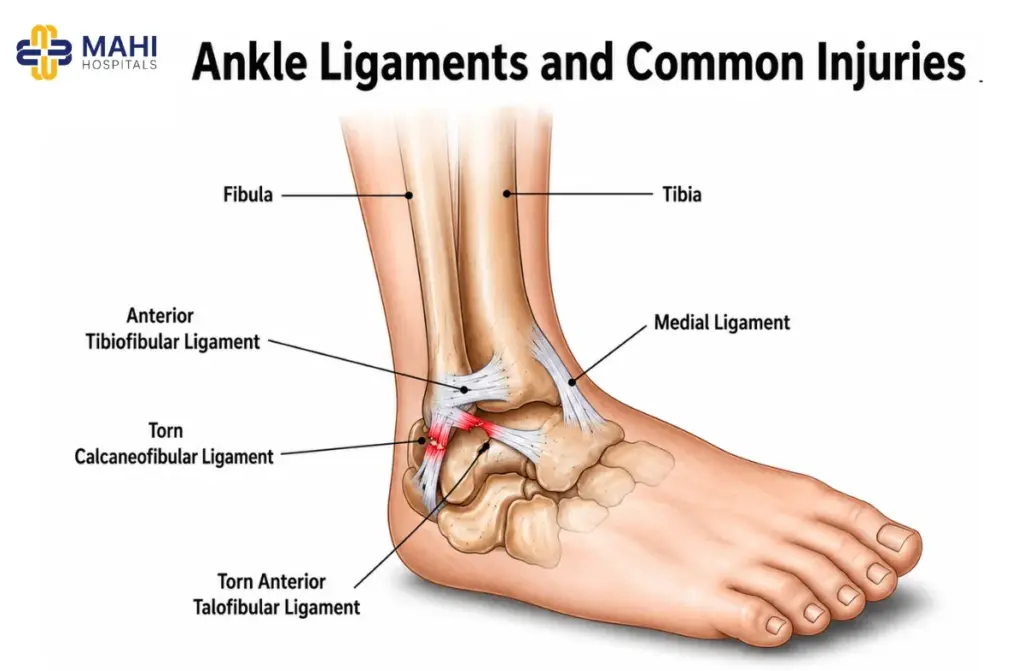
Muscles generate the force behind movement. Tendons connect muscle to bone and transfer that force into motion. Ligaments connect bone to bone and keep joints stable during movement. Fascia is the connective layer wrapping around muscles and organs, providing structure. Cartilage cushions the space between bones inside a joint. Bursae are small fluid filled sacs that reduce friction where tendons and muscles glide over bone.
Because every one of these structures is in near constant use, all of them are vulnerable to sudden trauma or to the slow wear of repetitive strain.
Types of Soft Tissue Injury
A sprain is a stretched or torn ligament, usually from a sudden twist, the classic rolled ankle being the most common example. A strain is damage to a muscle or tendon, often seen during heavy lifting or a sudden sprint. A contusion, or bruise, comes from a direct blow that damages small blood vessels under the skin. Tendinitis is irritation or inflammation of a tendon from repeated use, common at the shoulder, elbow, and Achilles tendon. Bursitis is inflammation of a bursa, usually from repetitive movement or sustained pressure on a joint. At the more serious end sit partial and complete tears of muscle, tendon, or ligament tissue, which can significantly limit movement and sometimes require surgical repair.
How Severe is it: The Three Grades
| Grade | Severity | What It Looks Like |
| Grade 1 | Mild | Minor stretching of fibres, little loss of strength |
| Grade 2 | Moderate | Partial tear, noticeable pain, swelling, and reduced movement |
| Grade 3 | Severe | Complete tear or rupture, significant loss of function |
Grade 1 injuries typically settle with rest and basic care. Grade 2 injuries usually need structured physiotherapy. Grade 3 injuries often require surgical repair followed by a longer rehabilitation program.
What Causes These Injuries
Sudden, acute injuries happen when excessive force hits a muscle, tendon, or ligament during sport, a fall, a collision, or an awkward movement. Athletes are at obvious risk from rapid direction changes, jumping, and contact, but everyday activities cause just as many injuries, lifting something heavy the wrong way, slipping on a wet floor, or catching a foot on uneven pavement.
Overuse injuries build more slowly, from running, typing, manual labour, or repetitive exercise without enough recovery time between sessions. Risk climbs further with poor flexibility, muscle weakness, skipping a proper warm up, incorrect technique, carrying extra body weight, ageing tissue, and any past injury to the same area that never fully healed.
Recognising the Symptoms
Pain at the injury site, swelling, tenderness to touch, bruising, stiffness, reduced range of motion, muscle weakness, joint instability, and a popping or snapping sensation at the moment of injury are the most common signs. Severe cases can bring visible deformity or an inability to bear weight at all.
Soft Tissue Injuries of the Knee
The knee carries the full weight of the body while allowing bending, twisting, and pivoting, which makes it one of the most frequently injured joints. Ligaments, tendons, muscles, and cartilage around the knee can all be affected during sport, a fall, a road accident, or simply a sudden change of direction while walking.
Symptoms can range from mild, brief swelling to real instability and difficulty walking. A popping sound at the moment of injury often points to ligament involvement, and a sensation of the knee locking or giving way is a signal worth taking seriously rather than waiting out.
Common causes of knee soft tissue injuries include sports with rapid direction changes such as football, basketball, cricket, and badminton, sudden twisting with the foot planted, direct impact from a fall or collision, overuse from running or repeated stair climbing, and contributing factors like poor footwear, weak supporting muscles, and skipped warm ups.
Getting an Accurate Diagnosis
Diagnosis usually starts with a detailed history and physical examination, how the injury happened, exactly where it hurts, and what movements are limited. The area is checked for tenderness, swelling, bruising, strength, joint stability, and range of motion.
Imaging is added when more detail is needed. X rays rule out fractures. Ultrasound can show tendon and muscle detail in real time. MRI remains the most reliable way to confirm ligament tears, tendon damage, muscle injury, and cartilage problems when the diagnosis is not clear from examination alone.
Treatment Options
Treatment depends on which tissue is involved, how severe the injury is, and the person’s overall health, but the goals stay the same: control pain and swelling, support tissue repair, restore movement, and reduce the chance of it happening again.
In the first few days, the long standing RICE method, Rest, Ice, Compression, and Elevation, remains a reasonable starting point for pain and swelling control. More recently, many clinicians, including guidance now used at several leading orthopedic centres, have moved toward a broader approach known as PEACE and LOVE. PEACE stands for Protection, Elevation, Avoiding anti-inflammatory medication early on, Compression, and Education, while LOVE, applied after the first few days, stands for Load, Optimism, Vascularisation, and Exercise. In plain terms, this means protecting the injury briefly, then introducing gentle, guided movement sooner rather than resting completely for an extended period, since controlled loading appears to support better tissue healing than prolonged immobilisation.
For pain, over the counter medication, prescribed anti inflammatories, or topical treatments can help, but medication works best as one part of a wider recovery plan rather than the only treatment.
For moderate to severe injuries, a brace, splint, compression sleeve, or crutches may be used temporarily to protect the tissue while it heals.
Physiotherapy and Rehabilitation
Physiotherapy is where lasting recovery actually happens. Pain and swelling can improve on their own, but without proper rehabilitation, injured tissue often heals in a weakened state, raising the risk of reinjury.
Early rehabilitation focuses on pain control, swelling reduction, and gentle mobility work. As healing progresses, strengthening exercises rebuild muscle support and joint stability, followed later by balance training, movement re education, and sport specific drills for anyone returning to competitive activity. Manual therapy, including joint mobilisation and soft tissue release, is often added to reduce stiffness and improve movement quality.
A minor strain might need only a handful of sessions. A severe tear can involve several months of structured, supervised rehabilitation.
When Advanced Treatment is Needed
Most soft tissue injury recover fully with conservative care, but a smaller group of cases need more than rest and physiotherapy.
Platelet rich plasma therapy concentrates platelets from a patient’s own blood and injects them into the injured area, aiming to support the body’s own repair process for certain tendon and ligament injuries. Shockwave therapy uses acoustic waves to stimulate blood flow and healing in chronic tendon conditions such as Achilles tendinopathy. Corticosteroid injections can reduce significant inflammation for short term relief, though repeated use is generally limited because it can weaken tissue over time. When a ligament, tendon, or muscle is completely ruptured, surgical repair becomes the option that restores structural integrity, particularly for anyone hoping to return to demanding physical activity.
How Long Recovery Actually Takes
| Injury Type | Typical Recovery Time |
| Mild muscle strain | 1 to 3 weeks |
| Moderate muscle strain | 4 to 8 weeks |
| Severe muscle tear | 3 to 6 months |
| Mild ligament sprain | 2 to 4 weeks |
| Moderate ligament sprain | 6 to 12 weeks |
| Severe ligament tear | 4 to 9 months |
| Tendinitis | Several weeks to months |
| Bursitis | 2 to 8 weeks |
| Post surgical repair | 6 to 12 months |
These are general ranges. Age, overall health, and how closely rehabilitation instructions are followed all shift the timeline, and returning to full activity too early is one of the most common reasons injuries come back worse the second time.
The Three Phases of Healing
Healing moves through three biological stages, and rehabilitation should match the current one. The inflammatory phase begins immediately and lasts several days, as the body clears damaged tissue and starts repair, bringing pain, swelling, and warmth. The repair phase follows over several weeks, as new collagen fibres form and controlled movement helps that tissue align properly instead of healing in a disorganized, stiff pattern. The remodeling phase can continue for months, as tissue gradually strengthens and progressive loading becomes the priority.
Pushing too hard too soon disrupts this sequence. Staying too inactive for too long slows it down just as much.
Exercises That Support Recovery
Rehabilitation typically starts with a gentle range of motion work to ease stiffness, followed by stretching to restore flexibility and strengthening to rebuild support around the injury. Useful exercises include heel slides for joint mobility, quadriceps sets for thigh strength, hamstring stretches for flexibility, calf raises for lower leg strength, glute bridges for hip and core stability, and balance work to reduce the chance of reinjury. Low impact activity such as walking, swimming, or cycling can support circulation and fitness without overloading healing tissue. Any exercise that brings on significant pain or swelling should stop, and that should be discussed with a physiotherapist before continuing.
When to Seek Medical Attention Immediately
Most soft tissue injuries improve with proper care, but certain symptoms mean it is time to see a specialist without delay: severe pain that does not ease with rest, rapid or extensive swelling, inability to move or bear weight on the area, visible deformity or joint instability, a popping sensation followed by real weakness, numbness or tingling, changes in skin colour or temperature, or fever and warmth around the injury.
What Happens if it Goes Untreated
Ignoring a soft tissue injury rarely makes it disappear quietly. Chronic pain can persist for months or years when tissue does not heal properly. Untreated ligament injuries can leave a joint genuinely unstable, raising the risk of repeat injury. Extended pain limiting movement often leads to muscle weakness and loss of function. Excess scar tissue can restrict flexibility. Over time, altered movement patterns compensating for an old injury can place extra stress on nearby joints, contributing to degenerative changes down the line.
Reducing Your Risk
Regular activity keeps muscles strong and joints stable. A proper warm up before exercise increases blood flow and prepares tissue for load. Ongoing stretching and strength training preserve flexibility and give joints better support. Correct technique during sport, exercise, and manual work at the office or home lowers strain significantly. Supportive, well fitted footwear reduces stress on the lower body during walking, running, and sport. Adequate rest between intense sessions gives tissue time to adapt rather than accumulate damage, and staying hydrated, eating well, and maintaining a healthy weight all support tissue health over the long run.
When to See an Orthopedic Specialist in Chennai
Most soft tissue injuries can be managed with rest and physiotherapy at home. It is worth booking a consultation rather than waiting if pain has not eased within a week, if a joint feels unstable or gives way, if there is a popping sensation followed by weakness, or if a knee, shoulder, or ankle injury is stopping you from working or exercising normally. Dr Vijay Kumar Sohanlal at MAHI Hospitals in Kilpauk, Chennai, evaluates sports injuries and soft tissue damage using clinical examination alongside ultrasound and MRI when needed, and builds a treatment plan around the specific tissue involved rather than a generic protocol.
Conclusion
Soft tissue injuries are common at every age and activity level, and the wide range of severity, from a strain that settles in days to a tear needing surgery, is exactly why an accurate diagnosis matters more than guessing based on symptoms alone. Understanding what type of tissue is involved, following the right early care, and committing to proper rehabilitation are what actually determine how fully and how quickly someone recovers. If symptoms are severe, not improving, or affecting daily life, a timely evaluation with an orthopedic specialist remains the safest way forward.
Read More: Best Multispeciality Hospitals in Kilpauk