
Medically Reviewed by Dr. Vijay Kumar Sohanlal, MBBS, MS (Orthopaedics), Orthopaedic & Joint Replacement Surgeon, Founder & Owner of MAHI Multispeciality Hospitals, Kilpauk, Chennai
Last medically reviewed: August 2026
There’s a specific moment a lot of patients describe the same way. It’s the day they stopped taking the stairs two at a time and started taking them one at a time, holding the railing. Nobody wakes up one morning suddenly unable to walk properly. It happens slower than that. A knee that clicks. A hip that aches after sitting too long. A shoulder that won’t quite reach the top shelf anymore. Most people wait it out for months, sometimes years, before they finally search for an orthopedic surgeon in Chennai. By then the condition has usually had plenty of time to get worse.
This page exists to save you some of that waiting. Below you’ll find what an orthopedic surgeon actually treats, how to tell if what you’re feeling needs attention now instead of later, what the treatment path looks like at MAHI Hospitals, and what to expect if surgery does end up being the right option.
About This Practice
MAHI Hospitals is a Chennai based orthopedic and joint care center on Poonamallee High Road, Vepery, led by Dr. Vijay Kumar Sohanlal. The practice treats the full range of bone, joint, and spine conditions, from a first time knee ache to complex revision joint replacements, and works on one core principle. Surgery is the last option discussed, never the first.
Meet Orthopedic Surgeon in Chennai, Dr. Vijay Kumar Sohanlal
Dr. Vijay Kumar Sohanlal has practiced orthopedics for over 18+ years and has personally performed more than 10,000 procedures, ranging from routine fracture fixation to complex robotic assisted joint replacements. He topped his batch in MBBS at Mysore University, completed his MS in Orthopedics at Sri Ramachandra Medical College in Chennai, and trained under senior arthroplasty surgeons at Breach Candy and Lilavati Hospital in Mumbai.
What sets his background apart from most orthopedic surgeons in Chennai is the international fellowship training that followed. He completed an advanced arthroplasty fellowship at St. Josef Bruderkrankenhaus in Germany, and a joint replacement and arthroscopy fellowship at Sportsmed Hospital in Australia. He is founder and Owner of MAHI Hospitals, He is senior surgical roles at Medway Group of Hospitals, MGM Healthcare, and Fortis Malar Hospital, experience that still shapes how he approaches complicated or previously failed surgical cases today.
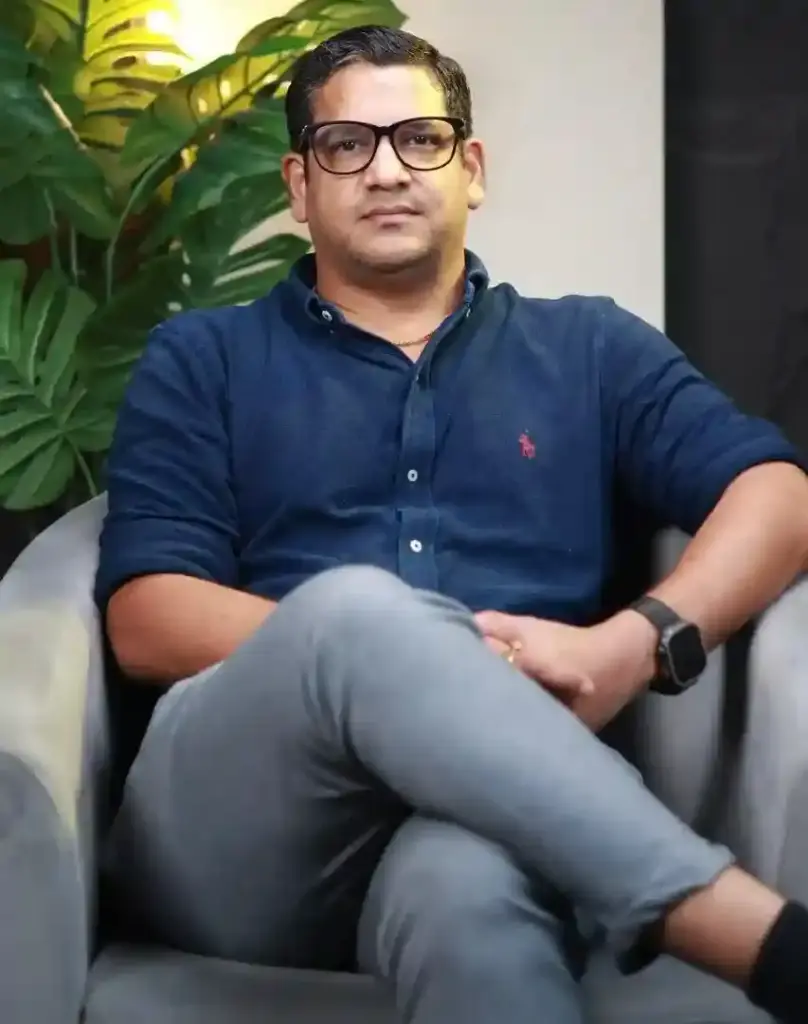
He is a practicing member of the Indian Orthopedic Association, the Tamil Nadu Orthopedic Association, and the Tamil Nadu Arthroscopic Society.
Credentials at a glance
| Qualification | Institution |
| MBBS, Batch Topper, 2002 | Mysore University |
| MS Orthopedics | Sri Ramachandra Medical College, Chennai |
| Joint Replacement Fellowship | Breach Candy and Lilavati Hospital, Mumbai |
| Advanced Arthroplasty Fellowship | St. Josef Bruderkrankenhaus, Germany |
| Arthroscopy and Joint Replacement Fellowship | Sportsmed Hospital, Australia |
One detail worth mentioning. The German and Australian fellowships weren’t only about adding qualifications to a profile. They changed his actual operating habits, including more conservative bone cuts during knee replacement, gentler soft tissue handling during minimally invasive procedures, and structured, day by day rehabilitation protocols instead of generic recovery advice. Patients in Chennai get the benefit of that training without needing to travel anywhere for it.
Do You Actually Need to See an Orthopedic Surgeon?
Most people try to wait out joint pain. Sometimes that’s fine. A mild ankle sprain or a one time backache after gardening usually settles on its own. The real challenge is knowing which symptoms are safe to wait on and which ones need to be looked at properly.
As a general rule, book a consultation if you notice any of the following:
- Joint pain that has lasted more than three or four weeks, not just a few bad days
- Morning stiffness that takes more than half an hour to loosen up
- A knee or hip that gives way, locks, or clicks audibly when you move
- Pain strong enough to wake you up at night
- A sports injury that keeps recurring despite rest
- Visible swelling around a joint that isn’t going down
- A recent fall or accident, even if you can technically still walk
- A slowly worsening deformity in a finger, knee, or the spine
- Arthritis symptoms that haven’t responded to medication or physiotherapy after several weeks
None of these automatically mean you need surgery. They simply mean it’s time for someone to actually examine the joint, take an image if needed, and tell you clearly what’s going on, rather than guessing based on advice from friends or the internet.
Symptom to Cause Quick Reference
| What you’re feeling | What it’s often pointing to |
| Knee or hip pain that’s been there a while | Osteoarthritis, cartilage wear, meniscus damage |
| Morning stiffness over 30 minutes | Arthritis or inflammatory joint disease |
| Warm, swollen joint | Inflammation, infection, or ligament injury |
| Clicking or a joint that gives way | Meniscus or ligament tear |
| Hard time standing up from a chair | Early knee arthritis or muscle weakness around the joint |
| Pain lifting the arm overhead | Rotator cuff strain or frozen shoulder |
| Back pain with numbness down the leg | Disc herniation or nerve compression |
| Fracture from a minor fall | Possible low bone density or osteoporosis |
What Gets Treated Here
Joint Conditions
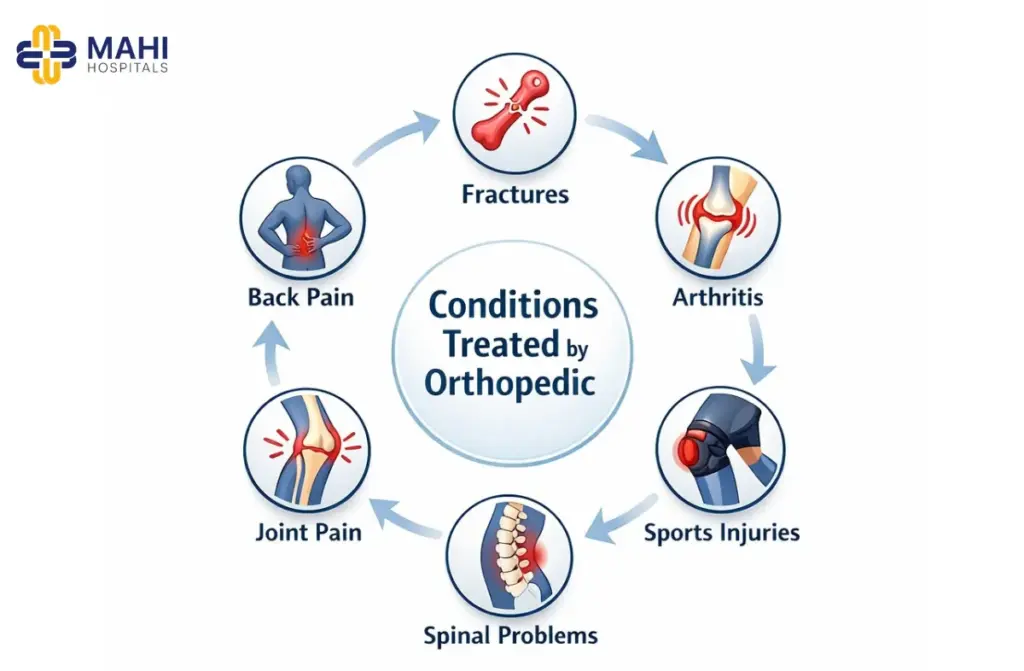
Knee osteoarthritis, hip arthritis, shoulder arthritis, rheumatoid arthritis, cartilage injuries, and joint deformities are managed along a spectrum. Treatment usually starts with physiotherapy and activity modification, moves through injections and regenerative options where suitable, and reaches joint replacement only for patients whose joint damage has gone past the point where conservative care can help.
Sports Injuries
ACL and PCL tears, meniscus tears, rotator cuff injuries, tennis elbow, golfer’s elbow, ankle ligament sprains, and tendon problems are treated with arthroscopy, or keyhole surgery, wherever it’s genuinely appropriate, since it usually means less tissue disruption and a faster return to sport.
Fractures and Trauma
Upper and lower limb fractures, hip fractures, pelvic injuries, wrist and hand trauma, and multiple fracture cases from road accidents or falls are stabilized using modern fixation implants, with the goal of getting patients moving again as early as it’s safe to do so.
Spine
Cervical spondylosis, lumbar disc prolapse, sciatica, and spinal stenosis are treated conservatively first, through medication, physiotherapy, and posture correction, with surgery reserved for cases where nerve compression is progressing or conservative treatment hasn’t worked.
Pediatric and Age Related Orthopedics
Growth related bone conditions in children, and osteoporosis, foot disorders, and hand conditions common in older adults, are handled with treatment plans built around the patient’s stage of life rather than a single standard template.
Hip Replacement, A Closer Look
Hip replacement comes up often enough on this page that it deserves its own section, since it’s one of the procedures Dr. Vijay Kumar Sohanlal is most frequently consulted for.
When it’s actually being considered
- Hip pain that hasn’t improved with medication, injections, or months of physiotherapy
- Stiffness bad enough that bending to put on socks or shoes becomes difficult
- Pain that continues or worsens even while resting
- Needing a walking stick or someone’s support to move around
- X rays showing bone on bone contact or significant joint space loss
How the decision actually gets made It starts with an X ray or MRI, followed by an honest conversation about how the pain is affecting daily life and whether conservative treatment still has room to work. If it does, that’s tried first. If the joint is genuinely past that point, hip replacement, either partial or total depending on the extent of damage, gets discussed as an option rather than a foregone conclusion.
Recovery, realistically Most patients are walking with support within a day or two after surgery, under physiotherapist supervision. Full recovery, meaning comfortable daily movement without thinking about the joint, typically takes a few months and depends heavily on how consistently rehabilitation exercises are followed at home.
On cost It varies depending on the implant used, whether robotic assistance is involved, and the length of hospital stay. You’ll receive a written estimate during your consultation, with nothing vague added later.
Robotic Assisted vs. Conventional Surgery
| Factor | Robotic Assisted | Conventional |
| Surgical planning | Patient specific 3D plan before surgery | Standard planning |
| Implant alignment | More precise | Depends more on manual technique |
| Tissue handling | Generally less soft tissue disruption | More variable |
| Recovery pace | Often faster with structured rehab | Can take longer |
| Where it helps most | Complex or revision replacements | Many routine, straightforward cases |
It’s worth being upfront about one thing. A robot doesn’t replace surgical judgment. It’s a planning and precision tool. Outcomes still depend on whether the patient is a good candidate, how the surgery is executed, and how seriously rehabilitation is taken afterward, the same three factors that mattered long before robotics existed.
The Consultation to Recovery Path at MAHI
- Consultation. Time is spent understanding not just the pain, but what it’s stopping you from doing day to day.
- Diagnosis. X ray, MRI, or CT scans as needed, so the treatment plan is based on what imaging actually shows, not guesswork.
- Treatment plan. Conservative options are laid out first wherever they’re realistic. If surgery is the better long term path, every part of it is explained before you agree to anything.
- Treatment. This may include physiotherapy, PRP injections, arthroscopy, fracture fixation, or joint replacement, depending on the diagnosis.
- Rehabilitation. A physiotherapy program that adjusts week to week as strength returns.
- Follow up. Check ins that continue well past the initial recovery window, not just the first two weeks.
Why Early Evaluation Matters More Than People Think
Very few orthopedic problems appear overnight. A knee that aches occasionally today can, left untreated for a year or two, turn into a knee that needs far more extensive surgery than would have been necessary with earlier treatment. Getting checked early usually means:
- More cartilage and joint function is preserved
- Arthritis progression can often be slowed instead of just managed
- Muscle around the joint doesn’t weaken further from avoided movement
- Recovery, if treatment is needed later, tends to be faster
- Overall treatment cost is usually lower than treating an advanced stage problem
Patient Experiences
I just wanted to say thanks for the incredible care, patience, and approach you showed by mahi hospital and the doctor with my father. The way dr.vijay sohanlal handled the entire CFRA Procedure without general anesthesia — calming him, explaining each step, and keeping him at ease — was amazing.
My father struggles with anxiety, yet you managed everything without letting his BP fluctuate. You gave him comfort and confidence when he needed .wishing good luck for hospital…..as the hospitality higene,supporting doctors.. management.. everything was an great experience.
I truly recommend this hospital and the doctor because of its higine and dedication shown by the whole team in the hospital. We’re truly grateful for your compassion and skill. Thank you so much.
Locations
MAHI Hospitals No. 118, Poonamallee High Road, Vepery, Chennai 600084 Phone: +91 78069 17831 or +91 91597 11355 Email: mahiclinicchennai@gmail.com
Also consulting at: MGM Healthcare, 72 Nelson Manickam Road, Aminjikarai, Chennai 600029
Patients regularly travel from Anna Nagar, T Nagar, Velachery, Mogappair, Egmore, Purasawalkam, Chetpet, and Kilpauk, as well as from across Tamil Nadu.
Conclusion
Joint pain can gradually change the way you live. You may avoid carrying groceries, choose the lift instead of the stairs, or skip your usual walk because of the discomfort afterward. However, these changes do not always have to be permanent, especially when the underlying cause is identified and treated early.
If you have been searching for an orthopedic surgeon near me, remember that surgery is not always the first or only option. A proper orthopedic evaluation can help identify the cause of your joint pain and determine whether medication, physiotherapy, lifestyle changes, injections, or surgery may be appropriate.
Dr. Vijay Kumar Sohanlal and the team at MAHI Hospitals guide patients through their treatment options based on their individual condition and goals. A consultation can help you understand your diagnosis, explore suitable treatments, and make an informed decision about your joint health.
Read More: Best Orthopedic Surgeon in Kilpauk.