

Medically reviewed by: Dr. Vijay Kumar Sohanlal, MBBS, MS (Orthopaedics), Orthopaedic and Joint Replacement Surgeon, Founder and Owner, MAHI Multispecialty Hospital, Kilpauk, Chennai
Last medically reviewed: October 2026
Orthopaedic conditions can affect movement, comfort, and everyday activities. MAHI Hospitals in Chennai provides orthopaedic consultations and care for conditions affecting the bones, joints, muscles, ligaments, and tendons. The appropriate treatment depends on the patient’s symptoms, medical history, examination findings, and diagnostic results.
Patients seeking an Orthopedic Hospital in Chennai can learn about available treatment options, surgical procedures, and rehabilitation services before discussing an individual care plan with a qualified orthopaedic doctor.
About MAHI Hospitals
MAHI Hospitals is a multispeciality hospital located on Poonamallee High Road, Purasaiwakkam, Chennai. Its orthopaedic services include the assessment and management of bone, joint, and musculoskeletal conditions.
Dr. Vijay Kumar Sohanlal is an orthopaedic and joint replacement surgeon associated with MAHI Hospitals. His qualifications, professional experience, and areas of clinical practice should be reviewed against the hospital’s verified records.
The orthopaedic team assesses each patient’s condition and discusses suitable treatment options based on clinical findings. Depending on the diagnosis, management may include medication, physiotherapy, activity modification, further investigations, or surgery.
Orthopaedic Conditions Evaluated at MAHI Hospitals
Knee Pain and Knee Arthritis
Knee pain can occur due to osteoarthritis, injuries, inflammation, or other joint conditions. Assessment may include a medical history, physical examination, and imaging when clinically indicated. Treatment depends on the underlying cause and severity of symptoms.
Hip Pain and Hip Joint Conditions
Hip pain may be associated with arthritis, fractures, avascular necrosis, or other musculoskeletal conditions. A clinical assessment helps determine whether non-surgical management or a surgical procedure should be considered.
Fractures and Bone Injuries
Fractures may result from falls, accidents, sports injuries, or weakened bones. The treatment approach depends on the location and type of fracture, displacement, associated injuries, and the patient’s overall health.
Sports Injuries and Ligament Problems
Sports injuries can affect ligaments, tendons, cartilage, and other structures around the joints. Depending on the injury, management may involve rest, rehabilitation, physiotherapy, or surgical evaluation.
Back and Neck Problems
Back and neck symptoms may arise from muscular strain, degenerative changes, disc conditions, or nerve compression. Assessment helps identify potential causes and determine whether further investigation or specialist referral is needed.
Paediatric Orthopaedic Conditions
Children may require assessment for fractures, limb alignment concerns, growth-related problems, or congenital musculoskeletal conditions. Evaluation and treatment should be appropriate to the child’s age and development.
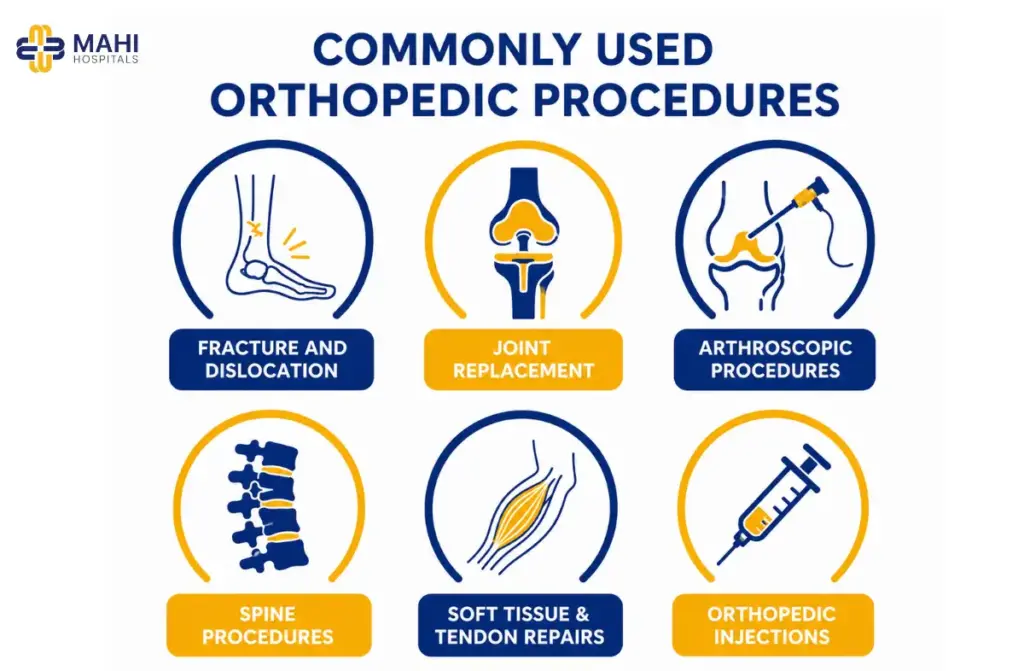
Orthopaedic Treatments and Procedures
The treatment recommended for an orthopaedic condition depends on the diagnosis, symptom severity, functional limitations, and individual health factors.
Knee Replacement Surgery
Knee replacement may be considered for selected patients with significant joint damage and persistent symptoms when appropriate non-surgical treatments have not provided sufficient relief. The surgeon discusses potential benefits, risks, alternatives, and recovery requirements.
Hip Replacement Surgery
Hip replacement may be considered for certain patients with advanced hip joint damage. Suitability is determined through clinical assessment and investigations, taking the patient’s overall health and functional needs into account.
Robotic-Assisted Joint Replacement
Robotic-assisted systems may support surgical planning and implant positioning during selected joint replacement procedures. Their use depends on the patient’s condition, the procedure planned, and the surgeon’s clinical judgement. Patients should discuss the potential benefits and limitations of this technology with their surgeon.
Arthroscopy
Arthroscopy is a surgical technique that uses a small camera and specialised instruments to assess or treat selected joint conditions. Whether it is appropriate depends on the diagnosis and the expected clinical benefit.
Fracture Management
Fracture treatment may include immobilisation, casting, splinting, or surgical fixation, depending on the nature of the injury. The treating doctor determines the appropriate approach after examining the patient.
Physiotherapy and Rehabilitation
Rehabilitation may help patients improve movement, strength, balance, and functional ability following an injury or procedure. The programme and expected recovery period vary according to the condition and individual progress.
How is an Orthopaedic Treatment Plan Determined?
An orthopaedic consultation generally involves the following steps:
- Medical history: Discussion of symptoms, previous injuries, medical conditions, and earlier treatments.
- Clinical examination: Assessment of pain, movement, joint stability, strength, and functional limitations, as appropriate.
- Diagnostic investigations: X-rays, MRI scans, blood tests, or other investigations may be advised when clinically indicated.
- Treatment discussion: The doctor explains the diagnosis, available options, potential risks, and expected limitations.
- Follow-up and rehabilitation: Further reviews are arranged according to the condition and treatment plan.
Not every orthopaedic condition requires surgery. The decision should be based on the patient’s clinical needs and an informed discussion with the treating doctor.
When Should You Consult an Orthopaedic Doctor?
Consider seeking medical assessment if you experience persistent joint pain, swelling, restricted movement, recurring sports injuries, difficulty walking, or symptoms that interfere with daily activities.
Seek urgent medical attention following a significant injury, when a bone may be fractured, if a joint becomes severely swollen, or if you cannot bear weight after an injury. A visibly deformed limb, an open fracture, or a cold, pale, or numb limb requires emergency assessment.
Consultation and Patient Information
Patients experiencing bone, joint, or movement-related symptoms can contact MAHI Hospitals to enquire about an orthopaedic consultation. The treating doctor can assess the condition, explain appropriate investigations, and discuss available treatment options.
Read More: Orthopedic Hospital in Kilpauk.