
Indian foods for strong bones are essential for long-term health. Strong bones and healthy muscles form the foundation of an active and pain-free life. From supporting posture and movement to protecting vital organs, bones play a critical role in everyday functioning. However, bone health is often overlooked until problems such as joint pain, fractures, or conditions like osteoporosis arise.
Indian Foods for Strong Bones offer a natural solution. Nutrition is one of the most powerful tools for maintaining and improving bone strength. A well-balanced diet rich in essential nutrients not only builds bone density but also slows down age-related bone loss. Indian Foods for Strong Bones – from ragi and sesame seeds to paneer and leafy greens – are naturally rich in calcium, vitamin D, and magnesium. Indian cuisine, known for its diversity and nutritional richness, offers a wide range of foods that naturally support bone and muscle health.
This guide explores why bone nutrition is important, which Indian foods are most beneficial, their health advantages, and how to incorporate them into your daily routine.
Why Bone Health Matters
Bones are living tissues that continuously break down and rebuild throughout life. During childhood and early adulthood, the body builds more bone than it loses. However, after the age of 30, bone loss gradually begins to exceed bone formation.
Without proper nutrition and care, bones can become weak and brittle over time. This increases the risk of:
- Fractures and injuries
- Joint pain and stiffness
- Reduced mobility
- Osteoporosis (loss of bone density)
Muscles are equally important, as they support and protect bones. Strong muscles improve balance, reduce fall risk, and enhance overall physical strength.
Key Nutrients Required for Strong Bones
To maintain bone strength, your body requires a combination of nutrients working together:
- Calcium: The primary building block of bones
- Vitamin D: Helps the body absorb calcium effectively
- Magnesium: Supports bone structure and density
- Protein: Essential for muscle repair and bone tissue formation
- Vitamin K: Helps in bone mineralization
- Omega-3 fatty acids: Reduce inflammation and support joint health
Indian foods naturally provide these nutrients when consumed in a balanced way.
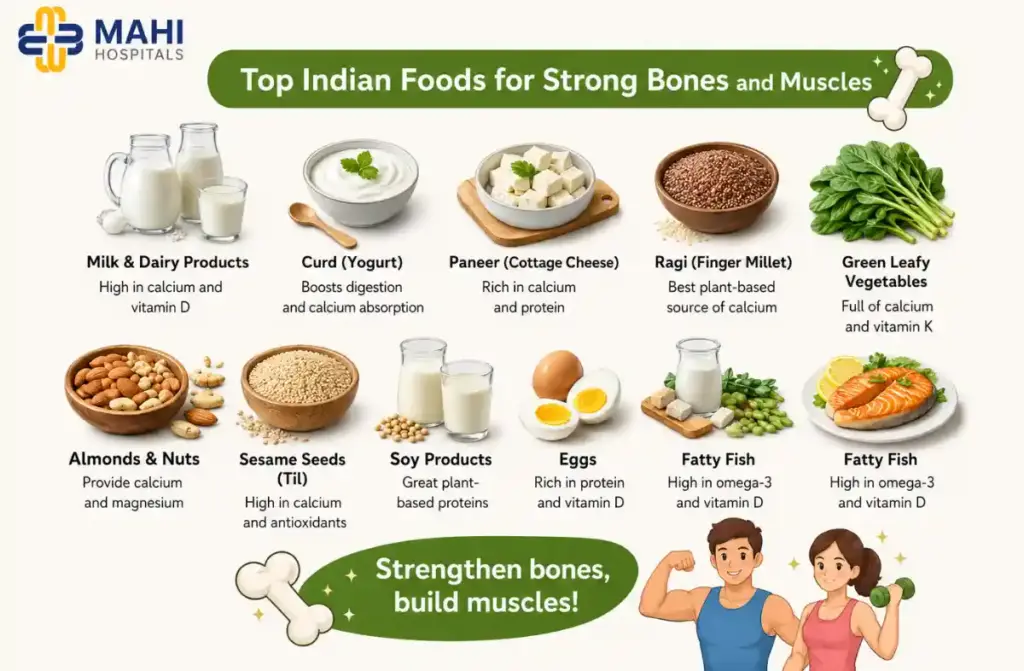
Top Indian Foods for Strong Bones and Muscles
1. Milk and Dairy Products
Why it’s important
Milk is one of the richest sources of calcium and is often fortified with vitamin D, making it essential for bone development.
Benefits
- Improves bone density
- Strengthens teeth
- Supports muscle contraction
- Prevents calcium deficiency
How to consume
- Drink a glass of milk daily
- Add to tea, coffee, or smoothies
- Use in porridges like ragi or oats
2. Curd (Yogurt)
Why it’s important
Curd provides calcium along with probiotics that improve gut health, which in turn enhances nutrient absorption.
Benefits
- Better digestion
- Improved calcium absorption
- Supports immunity
- Helps maintain bone strength
How to consume
- Eat plain curd with meals
- Make buttermilk
- Add fruits for a healthy snack
3. Paneer (Cottage Cheese)
Why it’s important
Paneer is rich in both calcium and protein, making it ideal for bone and muscle repair.
Benefits
- Builds muscle mass
- Strengthens bones
- Provides sustained energy
How to consume
- Add to curries or salads
- Grill or sauté for snacks
- Include in parathas or wraps
4. Ragi (Finger Millet)
Why it’s important
Ragi is one of the best plant-based sources of calcium in Indian diets.
Benefits
- Boosts bone density
- Supports growing children and elderly
- Helps prevent osteoporosis
How to consume
- Ragi porridge
- Ragi dosa or roti
- Ragi-based snacks
5. Green Leafy Vegetables
Why they’re important
Vegetables like spinach, methi, and drumstick leaves are rich in calcium, magnesium, and vitamin K.
Benefits
- Improve bone mineralization
- Reduce inflammation
- Support joint flexibility
How to consume
- Add to dals and curries
- Prepare stir-fries
- Blend into soups or smoothies
6. Almonds and Nuts
Why they’re important
Nuts provide magnesium, calcium, and healthy fats essential for bone and muscle health.
Benefits
- Improve bone strength
- Support brain and heart health
- Reduce inflammation
How to consume
- Soak almonds overnight and eat in the morning
- Add to cereals or desserts
- Use as a snack
7. Sesame Seeds (Til)
Why they’re important
Sesame seeds are highly concentrated in calcium and trace minerals.
Benefits
- Increase bone density
- Prevent bone weakening
- Improve joint health
How to consume
- Add to chutneys
- Use in ladoos
- Sprinkle over salads or curries
8. Soy Products (Tofu & Soy Milk)
Why they’re important
Soy-based foods are excellent plant-based sources of calcium and protein.
Benefits
- Supports bone structure
- Ideal for lactose-intolerant individuals
- Helps maintain muscle mass
How to consume
- Add tofu to curries or stir-fries
- Use soy milk in beverages
- Include in salads
9. Eggs
Why they’re important
Eggs are rich in protein and vitamin D, which helps the body absorb calcium.
Benefits
- Enhances bone strength
- Supports muscle repair
- Improves energy levels
How to consume
- Boiled eggs for breakfast
- Omelettes or scrambled eggs
- Add to curries
10. Fatty Fish
Why it’s important
Fish like salmon and sardines are rich in omega-3 fatty acids and vitamin D.
Benefits
- Reduces inflammation
- Improves calcium absorption
- Strengthens joints
How to consume
- Grill or bake fish
- Add to curries
- Include 2–3 times a week
11. Whole Grains
Why they’re important
Whole grains provide magnesium and fiber, which support bone structure and metabolism.
Benefits
- Improve digestion
- Maintain healthy weight
- Support bone strength
How to consume
- Replace white rice with brown rice
- Eat oats for breakfast
- Include millets in meals
12. Fruits Rich in Vitamin C
Why they’re important
Vitamin C helps produce collagen, a key protein for bone structure.
Benefits
- Improves bone flexibility
- Enhances healing
- Supports immunity
How to consume
- Eat oranges, guava, or amla
- Drink fresh juices
- Add to salads
13. Avocados and Healthy Fats
Why they’re important
Healthy fats help reduce inflammation and improve nutrient absorption.
Benefits
- Protect joints
- Improve overall health
- Support muscle function
How to consume
- Add to salads
- Spread on toast
- Blend into smoothies
Sample Daily Diet Plan for Strong Bones
Morning
- Warm milk or ragi porridge
- Soaked almonds and walnuts
Mid-Morning
- Fruit (orange/banana)
- Curd with seeds
Lunch
- Brown rice or roti
- Spinach dal
- Paneer or vegetable curry
Evening Snack
- Sesame ladoo
- Buttermilk or turmeric milk
Dinner
- Grilled fish or tofu
- Chapati with greens
- Steamed vegetables
Foods to Limit for Better Bone Health
Certain foods can weaken bones if consumed excessively:
- High-sugar foods
- Soft drinks
- Excess caffeine
- Processed and packaged foods
- High salt intake
Reducing these helps preserve calcium levels in the body.
Additional Lifestyle Tips
Diet alone is not enough lifestyle plays a major role:
- Get regular sunlight exposure for vitamin D
- Engage in weight-bearing exercises like walking or yoga
- Maintain a healthy weight
- Avoid smoking and excessive alcohol
Conclusion
Strong bones and muscles are essential for a healthy and active life. Indian foods provide a natural, effective way to nourish your body with the nutrients it needs. By including a variety of dairy products, leafy greens, nuts, seeds, and protein-rich foods in your daily meals, you can significantly improve bone health. Consistency is key regular intake of nutrient-rich foods, combined with an active lifestyle, ensures long-term strength, mobility, and overall well-being.
Read More: Robotic knee replacement Surgeon in Kilpauk.